
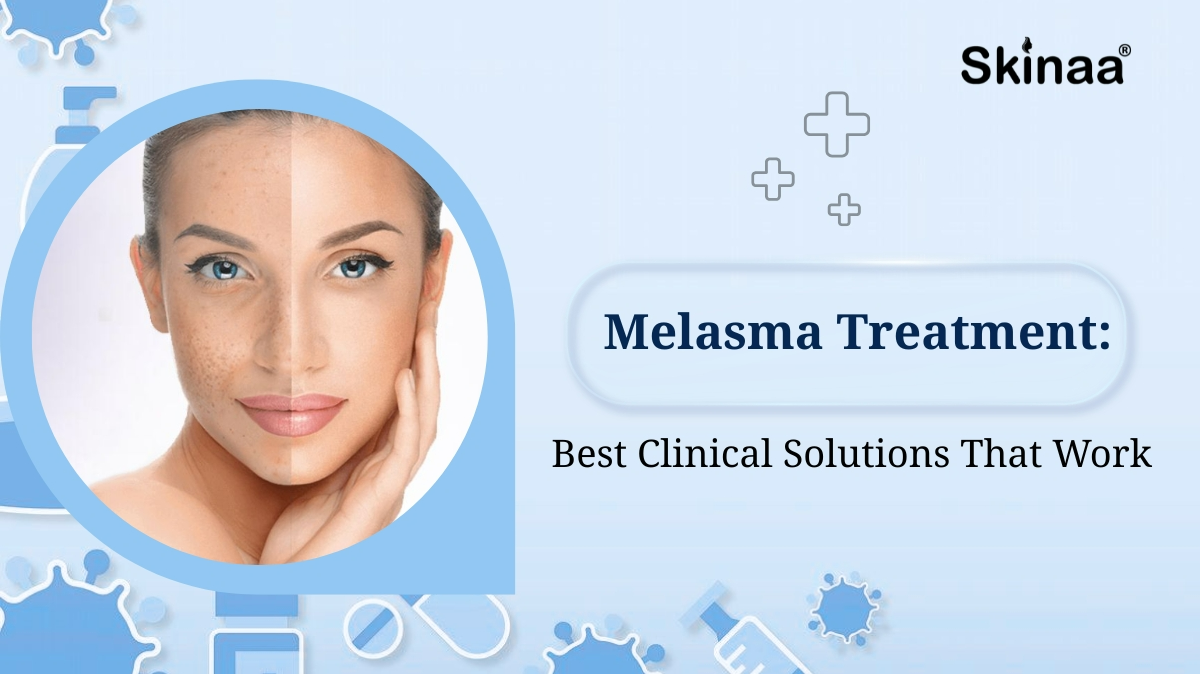
Melasma is one of the most common yet challenging pigmentation concerns seen in dermatology practice. Unlike tanning or post-acne marks, melasma tends to stay longer, come back repeatedly, and often becomes more noticeable over time.
Many patients share a similar experience — they try multiple creams, home remedies, and even treatments, see slight improvement, and then suddenly the pigmentation returns. This cycle creates frustration and confusion.
The reason behind this is simple. Melasma is not just a surface-level pigmentation issue. It is a chronic condition influenced by internal factors like hormones and external triggers like sun exposure and heat. Because of this, treating melasma requires more than just applying products. It requires a structured and medically guided approach.
At Skinaa Clinic, melasma is managed through evidence-based dermatology protocols, focusing on long-term control, skin safety, and consistent improvement rather than temporary results.
What is Melasma? (Clinical Understanding)
Melasma appears as dark, irregular patches on the skin, most commonly on the cheeks, forehead, upper lip, and nose. These patches develop due to an overproduction of melanin, the pigment responsible for skin color.
From a dermatological perspective, melasma is not harmful, but it is persistent. It behaves differently from other pigmentation concerns because it is deeply linked to internal triggers. This is why it often does not respond well to over-the-counter products or random treatments.
Why Melasma is Difficult to Treat
Melasma is considered one of the more complex pigmentation disorders because it does not have a single cause. It is influenced by multiple factors working together.
Sun exposure plays a major role, as even minimal UV exposure can activate melanocytes and worsen pigmentation. Hormonal fluctuations further complicate the condition, making it more common in individuals with hormonal imbalance or during certain life phases.
Another important factor is skin sensitivity. Aggressive treatments or incorrect products can irritate the skin, which may actually worsen melasma instead of improving it. This is why a controlled and balanced treatment plan is essential.
Common Causes of Melasma
Melasma develops due to a combination of internal and external triggers rather than a single reason.
Sun exposure remains the most significant trigger, as UV rays stimulate pigment production even in small amounts. Hormonal changes are another key factor, especially in individuals experiencing fluctuations due to lifestyle or medical conditions.
Genetics also plays a role, making some individuals more prone to melasma than others. Additionally, heat exposure and skin irritation caused by harsh products can aggravate the condition further.
Best Clinical Treatments for Melasma
Modern dermatology focuses on combining different treatments to achieve stable and long-lasting results. No single treatment works for every patient, which is why personalization is important.
The foundation of melasma treatment lies in medically prescribed topical formulations that help regulate melanin production and gradually reduce pigmentation.
Topical Treatment (Depigmenting Agents & Serums)
Dermatologist-recommended topical treatments are considered the first-line treatment for melasma and hyperpigmentation. These work by controlling melanin production and improving overall skin tone.
Commonly used depigmenting agents for melasma include hydroquinone, which is known as the gold standard for pigmentation treatment, along with azelaic acid, kojic acid, and arbutin, which help in gradually lightening dark patches. Newer and highly effective options like tranexamic acid (topical) are also widely used in modern melasma treatment protocols.
In addition to these, retinoids (tretinoin/retinol) help increase skin cell turnover, allowing pigmented cells to shed faster and enhancing the penetration of other active ingredients. Supportive ingredients like niacinamide and vitamin C serums further help in reducing pigmentation, improving skin brightness, and protecting against sun damage.
In many cases, dermatologists prescribe combination creams (triple combination therapy) for faster and more controlled results, making it one of the best clinical treatments for melasma.
Oral Treatment (Internal Support for Pigmentation Control)
For moderate to severe or resistant melasma, oral treatments are added to support pigmentation control from within. Glutathione and vitamin C are commonly used antioxidants that help reduce oxidative stress and improve skin clarity.
In selected cases, oral tranexamic acid may be prescribed to control deeper pigmentation triggers, especially those linked to hormonal or vascular factors. Additionally, certain antioxidant supplements may be recommended to enhance overall treatment results and prevent recurrence.
Chemical Peels
Chemical peels are commonly used to improve melasma, but they must be carefully selected. Superficial peels help in gently exfoliating the skin, improving pigmentation, and enhancing the absorption of active ingredients.
Aggressive peels are generally avoided, as they can irritate the skin and trigger rebound pigmentation.
Laser and Light-Based Treatments
Laser treatments can be effective in managing melasma when used with precision. They work by targeting pigment and improving overall skin tone.
However, lasers are not suitable for every case. Improper use can worsen melasma, which is why they should always be performed under experienced dermatological supervision.
MNRF (Microneedling Radiofrequency)
MNRF is increasingly being used as a supportive treatment for melasma, especially in patients with resistant pigmentation or uneven skin texture.
This treatment works by improving skin quality and stimulating collagen, which helps the skin respond better to other therapies. It is not a primary treatment for melasma but plays an important role in combination protocols.
Bio-Stimulating Treatments (PRP)
PRP therapy supports the skin’s natural healing process and enhances overall skin health. By improving skin regeneration and texture, PRP complements other melasma treatments.
While PRP alone does not remove melasma, it helps improve treatment outcomes when used as part of a combined approach.
Why Combination Therapy Works Best
Melasma cannot be effectively treated with a single solution. The most successful results come from combining medical treatment, clinical procedures, and proper skincare.
This approach allows dermatologists to control pigment production, improve skin quality, and maintain results over time. It also reduces the chances of recurrence, which is one of the biggest concerns in melasma treatment.
Real Problem-Solving Insight
A very common situation seen in clinics is that patients stop treatment as soon as they notice improvement. This leads to relapse.
Melasma requires maintenance. Without continued care, even well-treated skin can develop pigmentation again. Another common mistake is relying on random products or home remedies, which often irritate the skin and worsen the condition.
The key to managing melasma is patience, consistency, and following a structured plan rather than looking for quick fixes.
Role of Skincare in Melasma Treatment
Skincare plays a critical role in maintaining treatment results. Among all products, sunscreen is the most important. Daily use of a broad-spectrum sunscreen is essential, regardless of weather or indoor conditions.
A gentle cleanser helps avoid irritation, while a good moisturizer supports the skin barrier. Targeted serums may be added under dermatologist guidance, depending on individual skin needs.
Without proper skincare, even advanced treatments will not deliver lasting results.
Why Choose Skinaa Clinic for Melasma Treatment
At Skinaa Clinic, melasma treatment is approached with precision and care. Each patient undergoes a detailed skin evaluation to understand the type and depth of pigmentation.
With over 13 years of dermatological experience and more than 5 lakh patients treated, Skinaa focuses on safe and effective treatment protocols. Instead of aggressive methods, the clinic follows a gradual approach that ensures visible improvement without damaging the skin.
Patients receive customized plans that combine medical treatment, clinical procedures, and skincare guidance. Continuous monitoring ensures that treatment is adjusted as the skin responds, leading to better long-term outcomes.
When Should You See a Dermatologist
If pigmentation is persistent, worsening, or not responding to basic products, it is important to seek professional help. Delaying treatment can make melasma more difficult to manage.
Early intervention not only improves results but also reduces the risk of recurrence and uneven skin tone.
Conclusion
Melasma is a complex condition, but it is manageable with the right approach. Understanding its triggers and following a structured treatment plan makes a significant difference.
Instead of relying on temporary solutions, choosing a dermatologist-guided treatment ensures safer, more consistent, and long-lasting results.
Take the First Step Towards Even Skin Tone
If you are struggling with melasma or stubborn pigmentation, consult the experts at Skinaa Clinic. Get a personalized treatment plan designed for your skin and achieve healthier, more even-toned skin.
FAQs
1. Can melasma be permanently cured?
Melasma can be controlled effectively, but maintenance is required to prevent recurrence.
2. Which treatment works best for melasma?
A combination of medical treatment, clinical procedures, and skincare provides the best results.
3. Is laser treatment safe for melasma?
Yes, when performed carefully by experienced dermatologists.
4. How long does treatment take?
Improvement is gradual and may take a few months depending on severity.
5. Can melasma worsen with wrong products?
Yes, harsh or unsuitable products can aggravate pigmentation.