
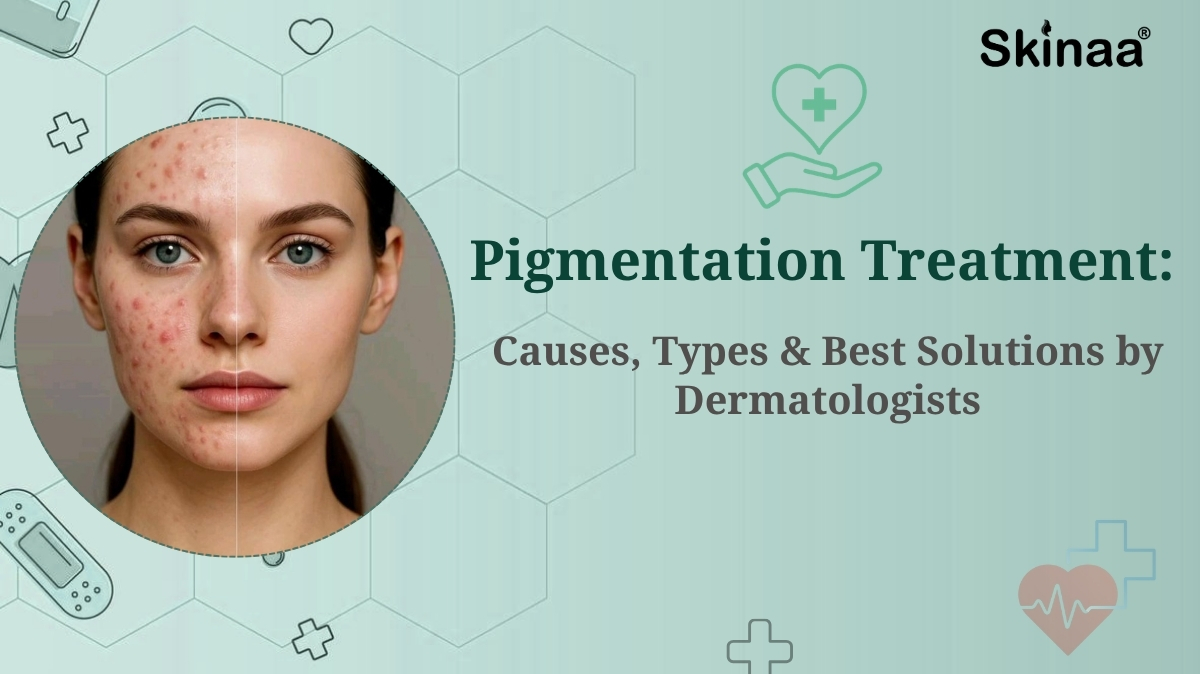
Pigmentation is one of the most common skin concerns seen in dermatology clinics today. Patients often come with concerns like uneven skin tone, dark spots, tanning, or patches that do not fade even after using multiple creams and home remedies.
A very common frustration patients express is:
“I’ve tried everything, but my pigmentation is not going away.”
The reason is simple — pigmentation is not just a surface issue. It is a complex skin condition involving melanin production, inflammation, sun exposure, and sometimes hormonal factors.
At Skinaa Clinic, pigmentation is treated with a scientific, diagnosis-first approach, focusing on identifying the type and cause before starting treatment. This ensures effective, long-term results instead of temporary improvement.
What is Pigmentation? (Clinical Understanding)
Pigmentation refers to the darkening of certain areas of the skin due to excess production of melanin, the pigment responsible for skin color.
This can appear as:
- Dark spots
- Patches
- Uneven skin tone
- Discoloration on face or body
From a dermatological perspective, pigmentation is not a single condition but a group of disorders, each requiring a different treatment approach.
Main Causes of Pigmentation
1. Sun Exposure (Primary Trigger)
Sun exposure is the most common and strongest trigger for pigmentation. When your skin is exposed to ultraviolet (UV) rays, it activates melanocytes (pigment-producing cells) to produce more melanin as a protective response.
Over time, repeated sun exposure without protection leads to:
- Tanning
- Sunspots
- Uneven skin tone
- Worsening of existing pigmentation like melasma
This is why patients often notice that their pigmentation becomes darker after stepping out in the sun. Even minimal daily exposure without sunscreen can gradually worsen the condition.
(“Best Sunscreen for Pigmentation (Dermatologist Guide)”)
2. Hormonal Changes
Hormonal imbalance is a major internal cause of pigmentation, especially in conditions like melasma.
Increased levels of hormones such as estrogen and progesterone can stimulate melanocytes, leading to patchy pigmentation, commonly seen on:
- Cheeks
- Forehead
- Upper lip
This is often observed during:
- Pregnancy
- Use of oral contraceptives
- Hormonal disorders
Hormonal pigmentation is usually chronic and tends to recur, which is why it requires long-term management.
(“Melasma Treatment: Best Clinical Solutions That Work”)
3. Post-Inflammatory Pigmentation (PIH)
Post-inflammatory hyperpigmentation occurs when the skin produces excess melanin in response to injury or inflammation.
Common triggers include:
- Acne
- Burns
- Cuts or wounds
- Aggressive skincare treatments
After the skin heals, it leaves behind dark spots or marks. This type of pigmentation is very common in Indian skin types and may take time to fade if not treated properly.
4. Aging and Cumulative Skin Damage
As the skin ages, the distribution of melanin becomes uneven due to long-term sun exposure and environmental damage.
This leads to:
- Age spots
- Patchy pigmentation
- Dull and uneven skin tone
Unlike temporary pigmentation, this type develops gradually over time and often requires clinical treatments for improvement.
5. Incorrect Skincare or Treatments
Using harsh or unsuitable skincare products can damage the skin barrier and trigger pigmentation.
Examples include:
- Over-exfoliation
- Use of strong actives without guidance
- Unregulated cosmetic treatments
When the skin barrier is compromised, it becomes more sensitive to inflammation and UV damage, leading to increased pigmentation.
Types of Pigmentation
Epidermal Pigmentation
Epidermal pigmentation occurs in the upper layer of the skin (epidermis). It usually appears as:
- Light brown to dark brown spots
- Well-defined patches
This type of pigmentation is relatively easier to treat because it is superficial. It responds well to:
- Topical treatments
- Chemical peels
- Proper skincare
With consistent treatment and sun protection, significant improvement can be achieved.
Dermal Pigmentation
Dermal pigmentation is located deeper in the skin (dermis), making it more difficult to treat.
It often appears as:
- Greyish or bluish patches
- Diffused discoloration
Because the pigment is deeper, surface treatments alone are not sufficient. This type usually requires:
- Laser treatments
- Advanced procedures like MNRF
- Combination therapy
Results take longer, and treatment must be carefully planned by a dermatologist.
Melasma
Melasma is a chronic form of pigmentation influenced by both hormonal factors and sun exposure.
It typically appears as:
- Symmetrical patches on cheeks, forehead, and upper lip
- Brown or grey-brown discoloration
Melasma is known for:
- Recurrence
- Sensitivity to sunlight
- Resistance to improper treatments
It requires a combination of medical treatment, sun protection, and maintenance therapy.
(“Hyperpigmentation vs Melasma: Key Differences”)
Post-Inflammatory Hyperpigmentation (PIH)
This type of pigmentation occurs after inflammation or injury to the skin.
It appears as:
- Dark spots left after acne or wounds
- Uneven marks in affected areas
PIH is common in individuals with medium to darker skin tones. While it may fade over time, proper treatment helps speed up the process and prevents worsening.
Dermat’s Perspective
From a dermatological perspective, one of the most important steps in treating pigmentation is identifying whether it is epidermal, dermal, or mixed.
Many patients fail to see results because they:
- Use the wrong treatments
- Do not understand the type of pigmentation
- Expect quick fixes for deeper conditions
Correct diagnosis is what determines treatment success.
Why Pigmentation Keeps Coming Back
One of the biggest concerns patients have is recurrence.
Common reasons include:
- Lack of sun protection
- Incorrect treatment approach
- Stopping treatment too early
- Ignoring underlying causes
Pigmentation is a chronic condition, and long-term management is required.
Best Dermatologist Treatments for Pigmentation
Modern dermatology offers multiple advanced solutions depending on the type and depth of pigmentation.
1. Medical Treatment (Foundation of Therapy)
Dermatologists prescribe targeted treatments to regulate melanin production and improve skin tone.
This step is essential before starting any advanced procedure.
2. Chemical Peels
Chemical peels help exfoliate the skin and reduce pigmentation.
They are effective for:
- Superficial pigmentation
- Acne marks
- Uneven skin tone
(“Chemical Peel for Pigmentation: Benefits & Results”)
3. Laser Treatment
Laser therapy targets deeper pigmentation and breaks down excess melanin.
It is recommended for:
- Stubborn pigmentation
- Dermal pigmentation
- Melasma (in selected cases)
(“Laser Treatment for Pigmentation: Is It Safe?”)
4. MNRF (Microneedling Radiofrequency)
MNRF helps in skin remodeling and improves pigmentation by stimulating collagen and repairing damaged skin.
5. Bio-Stimulating Treatments (PRP)
PRP helps in improving overall skin quality and supports pigmentation treatment by enhancing healing and regeneration.
6. Combination Therapy (Most Effective Approach)
The best results are achieved by combining treatments based on individual skin needs.
For example:
- Chemical peels + skincare
- Laser + PRP
- MNRF + medical treatment
How to Remove Dark Spots Permanently
There is no instant or permanent “one-time” solution for pigmentation.
Effective management includes:
- Correct diagnosis
- Consistent treatment
- Sun protection
- Maintenance therapy
(“How to Remove Dark Spots Permanently”)
Role of Sunscreen in Pigmentation
Sunscreen is not optional — it is essential.
Without proper sun protection:
- Pigmentation worsens
- Treatments become less effective
- Recurrence increases
(“Best Sunscreen for Pigmentation (Dermatologist Guide)”)
How to Choose the Right Treatment
Choosing the wrong treatment can worsen pigmentation.
The right approach depends on:
- Depth of pigmentation
- Skin type
- Underlying causes
This is why professional consultation is essential.
Real Problem-Solving Insight
Most patients fail to treat pigmentation because they:
- Use random creams
- Expect instant results
- Ignore sunscreen
- Do not follow a structured plan
Pigmentation requires patience, consistency, and expert guidance.
Why Choose Skinaa Clinic for Pigmentation Treatment
At Skinaa Clinic, pigmentation treatment is based on clinical expertise and personalized care.
With over 13+ years of experience and 5 lakh+ patients treated, Skinaa offers:
- Accurate diagnosis
- Advanced treatments like laser, MNRF, PRP
- Customized skincare plans
- Long-term maintenance strategies
The focus is on visible results and prevention of recurrence.
Recommended Skincare Along with Treatment
Dermatologists recommend:
- Gentle cleansers
- Pigmentation-correcting serums
- Moisturizers to maintain skin barrier
- Sunscreen for protection
Using incorrect products can worsen pigmentation.
When Should You See a Dermatologist
You should consult a dermatologist if:
- Pigmentation is persistent
- Dark spots are increasing
- OTC products are not working
- Skin tone is uneven
Early treatment ensures better results.
Conclusion
Pigmentation is a complex condition, but with the right approach, it can be effectively managed.
A combination of medical treatment, advanced procedures, and proper skincare ensures long-term improvement and healthier skin.
Take the First Step Towards Even-Toned Skin
If you are struggling with pigmentation, consult the experts at Skinaa Clinic. Get a personalized treatment plan designed for your skin.
FAQs
1. Can pigmentation be removed permanently?
It can be significantly reduced and controlled with proper treatment and maintenance.
2. Which treatment is best for pigmentation?
It depends on the type and depth of pigmentation.
3. Is laser safe for pigmentation?
Yes, when performed by experienced dermatologists.
4. How long does pigmentation treatment take?
Results vary but usually take a few weeks to months.
5. Does sunscreen really help?
Yes, sunscreen is essential to prevent worsening and recurrence.