
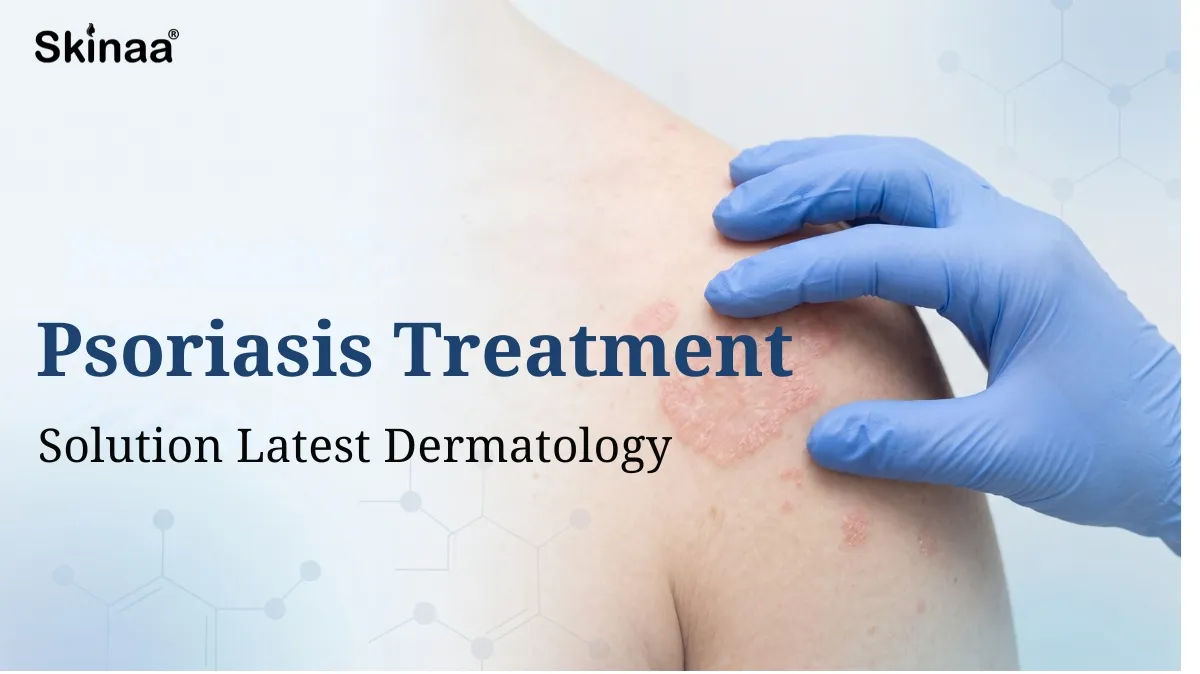
Psoriasis is more than just a skin problem. It is a chronic autoimmune condition that affects not only the skin but also confidence and daily life.
Many patients share a similar experience:
“My psoriasis improves with treatment, but after some time, it comes back again.”
This cycle can be frustrating.
The reason is simple — psoriasis is not a temporary condition. It requires long-term management, not short-term treatment.
With advancements in dermatology, there are now better ways to control psoriasis, reduce flare-ups, and improve skin health.
At Skinaa Clinic, psoriasis treatment is designed with a structured, long-term approach, focusing on both symptom control and prevention.
What is Psoriasis? (Clinical Understanding)
Psoriasis is an autoimmune condition where the skin cells grow faster than normal.
This leads to:
- Thick, scaly patches
- Redness and inflammation
- Itching or irritation
These patches commonly appear on the scalp, elbows, knees, and back, but can occur anywhere on the body.
The condition is not contagious, but it can be persistent and recurring.
Why Psoriasis Happens
Psoriasis is mainly linked to immune system dysfunction.
The immune system mistakenly speeds up skin cell production, causing buildup on the surface.
Several triggers can worsen the condition, including stress, infections, weather changes, and certain medications.
Genetics also plays a role, which is why some people are more prone to it.
Why Psoriasis Keeps Coming Back
One of the biggest concerns is recurrence.
Many patients stop treatment as soon as symptoms improve. However, the underlying condition remains active.
Triggers can reactivate the condition, leading to flare-ups.
This is why psoriasis treatment must focus on long-term control rather than temporary relief.
Latest Dermatology Treatments for Psoriasis
Medical Treatment (Primary Approach)
Dermatologists use medications to control inflammation and slow down excessive skin cell production.
This helps reduce scaling, redness, and itching.
Advanced Therapies
Modern dermatology offers advanced treatment options for moderate to severe psoriasis.
These therapies work by targeting the immune system and reducing abnormal activity.
They are particularly useful for patients who do not respond well to basic treatment.
Phototherapy (Light-Based Treatment)
Controlled exposure to specific light wavelengths helps slow down skin cell growth.
This treatment is effective when performed under medical supervision.
Combination Treatment Approach
The best results are usually achieved by combining different treatments.
For example, medical therapy may be combined with light therapy and supportive skincare.
This approach ensures better and more stable control of the condition.
What Results Can You Expect
Psoriasis treatment focuses on control, not permanent cure.
With proper treatment, patients can expect:
- Reduction in flare-ups
- Improved skin appearance
- Relief from itching and discomfort
Consistency is the key to maintaining results.
Real Problem-Solving Insight
One of the biggest mistakes patients make is treating psoriasis like a short-term condition.
They rely on temporary solutions or discontinue treatment early.
Another issue is ignoring triggers such as stress or lifestyle factors.
The correct approach is:
- Follow a structured treatment plan
- Continue maintenance even after improvement
- Identify and manage triggers
This helps achieve long-term stability.
Role of Skincare in Psoriasis Management
Skincare plays a crucial role in managing psoriasis.
Keeping the skin hydrated reduces dryness and irritation.
Using gentle, dermatologist-recommended products helps maintain the skin barrier and prevents flare-ups.
Avoiding harsh products is equally important.
Lifestyle Factors That Affect Psoriasis
Lifestyle has a direct impact on psoriasis.
Stress management, proper sleep, and a balanced diet help reduce flare-ups.
Ignoring these factors can make treatment less effective.
Why Choose Skinaa Clinic for Psoriasis Treatment
At Skinaa Clinic, psoriasis is treated with a personalized and long-term approach.
With over 13+ years of experience and 5 lakh+ patients treated, Skinaa offers:
- Accurate diagnosis
- Customized treatment plans
- Advanced dermatology solutions
- Continuous monitoring
The focus is on helping patients achieve better control and improved quality of life.
When Should You Consult a Dermatologist
You should seek professional help if:
- Skin patches are persistent
- Symptoms are worsening
- Over-the-counter treatments are not working
Early treatment helps prevent complications.
Conclusion
Psoriasis may not have a permanent cure, but it can be effectively managed.
With the right treatment plan, consistency, and lifestyle changes, patients can achieve long-term control and healthier skin.
If you are dealing with recurring psoriasis and not getting lasting results, it may be time for a more structured approach. At Skinaa Clinic, treatment plans are designed to control symptoms and reduce flare-ups for long-term improvement.
FAQs
1. Can psoriasis be cured permanently?
It can be controlled, but may not have a permanent cure.
2. What triggers psoriasis?
Stress, infections, and environmental factors.
3. Is psoriasis contagious?
No, it is not contagious.
4. How long does treatment take?
It varies, but long-term management is required.
5. Can lifestyle changes help?
Yes, they play an important role.