
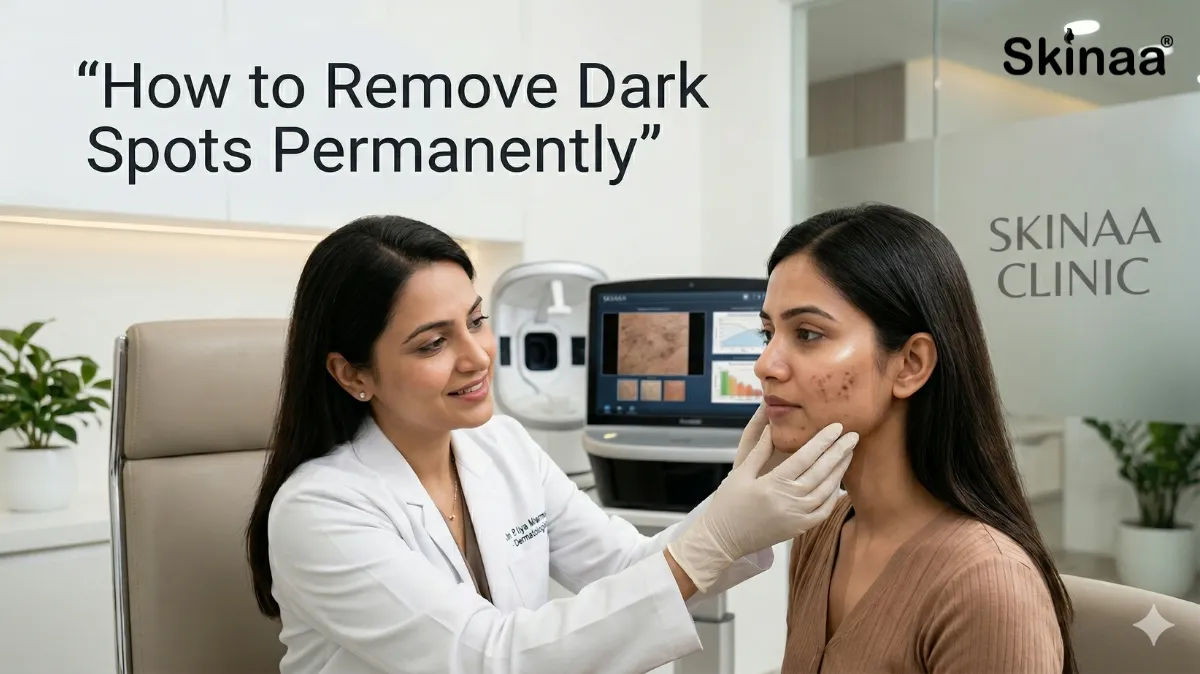
Dark spots are one of the most common skin concerns, yet also one of the most misunderstood. Many people try different creams, home remedies, and DIY solutions, expecting quick results. Some see temporary fading, but in most cases, the spots return or never fully disappear.
A common patient concern is:
“My dark spots lighten for a while, but they never go away completely.”
The reason behind this is simple. Dark spots are not all the same, and treating them without understanding their cause often leads to incomplete results.
From a dermatological perspective, removing dark spots permanently requires a combination of correct diagnosis, targeted treatment, and consistent maintenance. At Skinaa Clinic, treatment is designed to not just lighten pigmentation but to address the root cause and prevent recurrence.
What Are Dark Spots? (Clinical Understanding)
Dark spots, also known as hyperpigmentation, occur when excess melanin is produced in certain areas of the skin. This leads to patches or spots that appear darker than the surrounding skin.
These spots can develop on the face, neck, hands, and other exposed areas. While they are not harmful, they can affect skin tone and overall appearance.
From a clinical standpoint, identifying the type of pigmentation is essential before starting treatment, as each type responds differently.
Types of Dark Spots
Not all pigmentation is the same, and this is where most people go wrong.
Some dark spots are caused by acne and are known as post-inflammatory hyperpigmentation. Others may develop due to sun exposure, commonly referred to as sun spots. Conditions like melasma create deeper, more persistent pigmentation that is influenced by hormones.
Each type behaves differently, which is why using the same cream for all dark spots rarely works.
Why Dark Spots Don’t Go Away Easily
Dark spots are often stubborn because they are influenced by multiple factors.
Sun exposure is the biggest reason for persistence, as UV rays continuously stimulate melanin production. Even minimal exposure without protection can undo weeks of treatment.
Another factor is incorrect skincare. Using harsh or unsuitable products can irritate the skin and worsen pigmentation. In some cases, stopping treatment too early also leads to recurrence.
This is why a structured and consistent approach is required for long-term results.
Can Dark Spots Be Removed Permanently?
This is one of the most common questions.
From a medical perspective, dark spots can be significantly reduced and controlled, and in many cases, almost completely cleared. However, “permanent removal” depends on:
- Type of pigmentation
- Depth of pigment
- Consistency of treatment
- Sun protection
Without maintenance, pigmentation can return, especially in conditions like melasma.
Best Dermatologist Treatments for Dark Spots
Modern dermatology focuses on combining different treatments to achieve better and long-lasting results.
Medical Topical Treatments
Dermatologists prescribe formulations that regulate melanin production and gradually lighten pigmentation. These treatments work at a cellular level and form the base of any pigmentation treatment plan.
Chemical Peels
Chemical peels help in exfoliating the top layer of skin and reducing pigmentation. They also improve skin texture and enhance the absorption of active ingredients.
When done under medical supervision, peels are safe and effective for mild to moderate pigmentation.
Laser Treatments
Laser technology targets pigment directly and helps break it down. This leads to more noticeable and faster improvement, especially in stubborn or deeper pigmentation.
However, laser treatments must be carefully selected based on skin type and pigmentation type.
MNRF (Microneedling Radiofrequency)
MNRF is useful in improving skin quality and supporting pigmentation treatment. It works by stimulating collagen and enhancing overall skin repair, which helps in achieving a more even skin tone.
Bio-Stimulating Treatments (PRP)
PRP therapy improves skin regeneration and overall skin health. It is often used as a supportive treatment to enhance results and improve skin texture.
Why Combination Treatment Works Best
Dark spots rarely respond to a single treatment. The most effective results come from combining medical treatment, clinical procedures, and skincare.
This approach helps in targeting pigment at different levels, improving skin quality, and maintaining results over time.
Real Problem-Solving Insight
Many patients feel that their dark spots are not improving despite trying multiple products. In most cases, the issue is not the lack of effort but the lack of the right approach.
Using random products without understanding the cause can delay results. Similarly, stopping treatment as soon as improvement is seen often leads to recurrence.
The key is to follow a structured plan and give the skin enough time to respond.
Role of Skincare in Removing Dark Spots
Skincare plays a crucial role in both treatment and maintenance.
Sunscreen is the most important step. Without proper sun protection, pigmentation will continue to return, regardless of treatment.
A gentle cleanser helps maintain skin balance, while a good moisturizer supports the skin barrier. Targeted serums may be added under dermatologist guidance based on skin needs.
Why Choose Skinaa Clinic for Dark Spot Treatment
At Skinaa Clinic, pigmentation treatment is based on accurate diagnosis and personalized care.
With over 13+ years of experience and more than 5 lakh patients treated, Skinaa offers advanced treatments combined with medical expertise. Each patient receives a customized plan designed to address their specific skin concern.
The focus is on safe, gradual improvement and long-term skin health rather than quick fixes.
When Should You See a Dermatologist
If dark spots are persistent, worsening, or not responding to basic skincare, it is important to seek professional advice.
Early treatment not only improves results but also prevents pigmentation from becoming deeper and more difficult to treat.
Conclusion
Dark spots can be effectively treated, but they require the right approach. Understanding the type of pigmentation and following a dermatologist-guided treatment plan is essential for long-lasting results.
Instead of relying on temporary solutions, a structured and consistent approach ensures clearer, healthier skin.
Take the First Step Towards Clear Skin
If you are struggling with stubborn dark spots, consult the experts at Skinaa Clinic. Get a personalized treatment plan designed to help you achieve even-toned, healthy skin.
FAQs
1. Can dark spots be removed permanently?
They can be significantly reduced and controlled with proper treatment and maintenance.
2. Which treatment is best for dark spots?
The best treatment depends on the type of pigmentation and may include creams, peels, or laser.
3. How long does it take to remove dark spots?
It varies from a few weeks to a few months depending on severity.
4. Can home remedies remove dark spots?
They may help slightly but are usually not effective for deeper pigmentation.
5. Is sunscreen necessary for treating dark spots?
Yes, sunscreen is essential to prevent worsening and recurrence.