
Pigmentation concerns are among the most common reasons people visit a dermatology clinic. However, one of the biggest confusions patients have is understanding whether they are dealing with general hyperpigmentation or melasma.
At first glance, both may look similar — dark patches on the skin that affect overall complexion. Because of this, many people use random creams or treatments without understanding the exact condition. This often leads to temporary improvement followed by recurrence or even worsening.
A common statement heard in clinical practice is:
“I tried pigmentation creams, but it keeps coming back.”
The reason is simple. Melasma is a specific and more complex form of hyperpigmentation, and treating it like general pigmentation does not work effectively.
At Skinaa Clinic, accurate diagnosis is the first and most important step. Once the condition is clearly identified, treatment becomes more targeted, effective, and long-lasting.
What is Hyperpigmentation? (Clinical Understanding)
Hyperpigmentation is a broad term used to describe any condition where the skin becomes darker than its natural tone due to excess melanin production.
It can appear as spots, patches, or uneven skin tone and may affect different areas of the body.
From a dermatological perspective, hyperpigmentation is not a single condition but a category that includes multiple types, such as:
- Post-inflammatory pigmentation (after acne or injury)
- Sun spots caused by UV exposure
- Tanning-related uneven skin tone
The key point is that hyperpigmentation usually has a specific trigger and is often easier to treat when identified early.
What is Melasma? (Dermatologist Perspective)
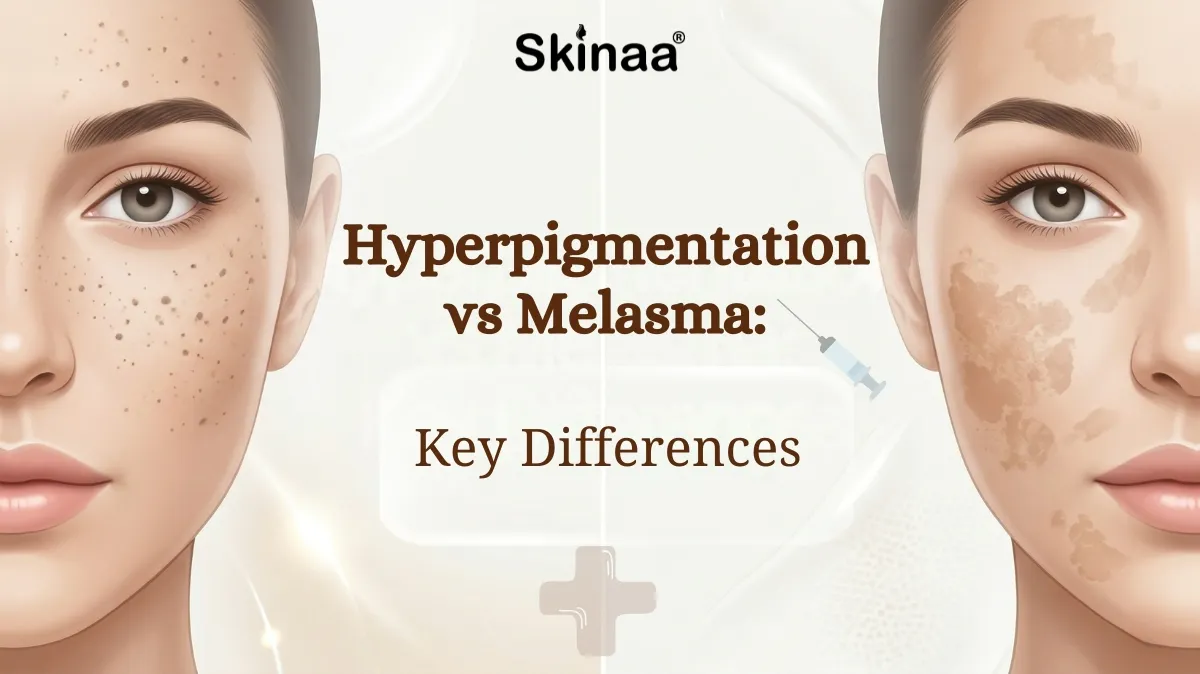
Melasma is a specific type of pigmentation disorder that presents as symmetrical, patchy dark areas, most commonly on the face.
It typically appears on:
- Cheeks
- Forehead
- Upper lip
- Nose
Unlike general pigmentation, melasma is strongly influenced by hormonal changes, sun exposure, and skin sensitivity. It tends to be more persistent and has a higher tendency to recur.
In clinical practice, melasma is considered a chronic condition that requires long-term management rather than one-time treatment.
Key Differences Between Hyperpigmentation and Melasma
Nature of Condition
Hyperpigmentation is a broad category, while melasma is a specific type within that category.
Cause
Hyperpigmentation is often triggered by external factors such as acne, sun exposure, or injury. Melasma, on the other hand, is influenced by internal factors like hormones along with sun exposure.
Pattern
Hyperpigmentation can appear as isolated spots or uneven patches. Melasma usually appears as symmetrical patches on both sides of the face.
Depth of Pigment
Melasma often involves deeper layers of the skin, making it more resistant to treatment compared to superficial pigmentation.
Recurrence
General pigmentation may resolve with proper treatment. Melasma has a higher tendency to return, especially if triggers are not controlled.
Treatment Approach
Hyperpigmentation can often be treated with topical treatments and basic procedures. Melasma requires a more cautious and combination-based approach to avoid worsening.
Why Misdiagnosis Leads to Treatment Failure
One of the most common reasons for unsuccessful treatment is incorrect identification of the condition.
When melasma is treated as simple pigmentation:
- Strong treatments may irritate the skin
- Pigmentation may temporarily lighten and then return
- In some cases, it may become darker
Similarly, treating mild pigmentation aggressively can damage the skin barrier and delay recovery.
This is why professional diagnosis is essential before starting any treatment.
Best Treatment Approach for Hyperpigmentation
Hyperpigmentation usually responds well to targeted treatment when the cause is identified.
Medical topical treatments help regulate melanin production and gradually lighten the affected areas. Chemical peels can improve skin turnover and reduce superficial pigmentation.
Laser treatments may be used in selected cases to target deeper pigment and improve overall skin tone. When combined with proper skincare, results are often visible and long-lasting.
Best Treatment Approach for Melasma
Melasma requires a more controlled and long-term approach.
Treatment usually begins with medical formulations that regulate pigment production. Chemical peels may be used carefully to improve superficial pigmentation without irritating the skin.
Laser treatments are used selectively and with caution, as aggressive treatment can trigger rebound pigmentation.
Supportive procedures like MNRF and PRP may be added to improve skin health and enhance overall results.
The focus in melasma treatment is not just on removing pigmentation but on controlling triggers and maintaining results.
Role of Skincare in Both Conditions
Regardless of the type of pigmentation, skincare plays a critical role in treatment success.
Sunscreen is the most important step. Without proper sun protection, pigmentation will continue to return. A gentle cleanser and moisturizer help maintain the skin barrier, while targeted treatments support pigmentation control.
Using incorrect or harsh products can worsen both hyperpigmentation and melasma.
Real Problem-Solving Insight
Patients often expect pigmentation to disappear quickly, but the reality is that skin takes time to repair.
Another common mistake is stopping treatment once improvement is seen. This leads to recurrence, especially in melasma.
The key to successful treatment is consistency and following a structured plan rather than switching products frequently.
Why Choose Skinaa Clinic for Pigmentation Treatment
At Skinaa Clinic, pigmentation treatment is based on accurate diagnosis and personalized care.
With over 13 years of dermatological expertise and more than 5 lakh patients treated, Skinaa offers:
- Detailed skin analysis to identify pigmentation type
- Customized treatment plans
- Safe use of advanced technologies
- Continuous monitoring for long-term results
The focus is on achieving visible improvement while maintaining skin safety and preventing recurrence.
When Should You See a Dermatologist
If pigmentation is persistent, worsening, or not responding to basic skincare, professional evaluation is necessary.
Early diagnosis helps in choosing the right treatment and prevents the condition from becoming more difficult to manage.
Hyperpigmentation and melasma may appear similar, but they are fundamentally different conditions that require different treatment approaches.
Understanding this difference is essential for achieving effective and long-lasting results. With proper diagnosis, targeted treatment, and consistent care, both conditions can be managed successfully.
Take the First Step Towards Clear Skin
If you are unsure whether your pigmentation is melasma or general hyperpigmentation, consult the experts at Skinaa Clinic. Get a personalized diagnosis and treatment plan designed for your skin.
FAQs
1. Is melasma the same as hyperpigmentation?
No, melasma is a specific type of hyperpigmentation with different causes and treatment needs.
2. Which is harder to treat?
Melasma is generally more difficult due to its chronic and recurring nature.
3. Can hyperpigmentation be cured permanently?
In many cases, it can be significantly reduced and controlled with proper treatment.
4. Does melasma come back after treatment?
Yes, if triggers like sun exposure are not controlled, it can recur.
5. Is laser treatment suitable for both?
Laser can be used, but it must be selected carefully, especially in melasma cases.