
Introduction
Hair fall is one of the most frustrating concerns because it often feels like nothing works. Many patients try oils, shampoos, home remedies, and supplements, but still notice thinning hair and reduced density.
A very common question asked in clinics is:
“I’ve heard about PRP treatment — but does it actually work?”
This is a valid concern. With so many treatments available, it becomes difficult to know what is effective and what is just a trend.
From a dermatological perspective, PRP (Platelet-Rich Plasma) is one of the most effective non-surgical treatments for hair loss when used in the right cases and with proper protocol.
At Skinaa Clinic, PRP is used as part of a structured hair fall treatment plan, focusing on improving hair growth, strengthening follicles, and delivering long-term results.
What is PRP for Hair Loss? (Clinical Understanding)
PRP stands for Platelet-Rich Plasma, a treatment derived from your own blood.
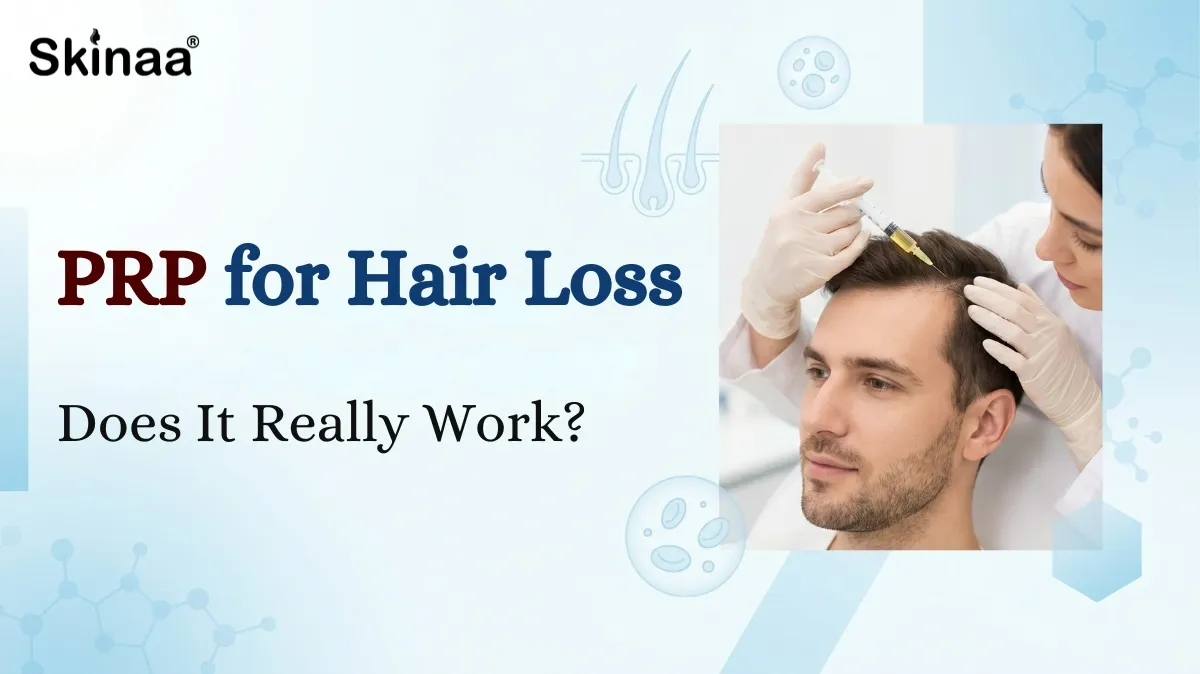
A small amount of blood is drawn and processed to concentrate platelets, which are rich in growth factors. These growth factors are then injected into the scalp.
These growth factors help:
- Stimulate hair follicles
- Improve blood supply to the scalp
- Strengthen weak hair roots
- Promote natural hair regrowth
Because PRP uses your own blood, it is considered a safe and biocompatible treatment.
How PRP Works for Hair Loss
Hair follicles often become weak due to hormonal changes, poor nutrition, or reduced blood supply.
PRP works by delivering concentrated growth factors directly to the hair roots. This activates dormant follicles and improves their function.
Over time, this leads to:
- Reduced hair fall
- Improved hair thickness
- Increased hair density
PRP does not create new hair follicles but helps revive and strengthen existing ones.
Does PRP Really Work? (Doctor’s Perspective)
Yes, PRP works — but not for everyone in the same way.
Its effectiveness depends on:
- Type of hair loss
- Stage of hair thinning
- Overall scalp health
- Consistency of treatment
PRP shows the best results in early to moderate hair loss, especially in conditions like androgenetic alopecia.
In advanced stages where follicles are no longer active, PRP alone may not be sufficient, and other treatments may be required.
Who is the Right Candidate for PRP?
PRP is suitable for individuals who are experiencing:
- Early hair thinning
- Increased hair shedding
- Reduced hair density
- Weak or fine hair
It is especially beneficial for patients who want a non-surgical and natural treatment option.
Who May Not Benefit Fully from PRP
PRP may have limited results in:
- Advanced baldness
- Completely inactive hair follicles
- Certain medical conditions
In such cases, dermatologists may recommend combination treatments or hair transplant.
PRP vs Other Hair Loss Treatments
PRP vs Minoxidil
Minoxidil is a topical treatment that helps stimulate hair growth, while PRP works internally by improving follicle health.
PRP often provides more targeted and natural stimulation, while Minoxidil requires continuous use.
PRP vs Hair Transplant
PRP is a non-surgical treatment, while hair transplant is a surgical solution for advanced hair loss.
PRP is ideal for early-stage hair fall, whereas transplant is recommended for permanent hair restoration in severe cases.
PRP as Part of Combination Treatment
In modern dermatology, PRP is rarely used alone.
It is often combined with:
- Medical treatment to control hair fall
- Scalp therapies to improve absorption
- Lifestyle and nutritional support
This combination approach provides better and faster results.
How Many PRP Sessions Are Needed?
PRP is not a one-time treatment.
Most patients require multiple sessions spaced over a few weeks, followed by maintenance sessions.
The exact number depends on the severity of hair loss and individual response to treatment.
When Will You See Results?
One of the most important things to understand is that PRP works gradually.
Initial improvement in hair fall may be noticed within a few weeks, but visible hair growth and density improvement take a few months.
Consistency is the key to achieving good results.
Real Problem-Solving Insight
Many patients expect instant results after one session, which leads to disappointment.
Another common mistake is discontinuing treatment too early. Hair growth is a slow process, and stopping midway affects outcomes.
The correct approach is to follow the complete treatment plan and maintenance schedule.
Role of Hair Care Along with PRP
PRP works best when supported by proper hair care.
Dermatologists recommend:
- Mild, scalp-friendly shampoos
- Avoiding harsh chemicals
- Maintaining good nutrition
- Managing stress
Using the wrong products can reduce treatment effectiveness.
Why Choose Skinaa Clinic for PRP Treatment
At Skinaa Clinic, PRP is performed using a precision-based medical protocol.
With over 13+ years of experience and 5 lakh+ patients treated, Skinaa offers:
- Advanced PRP techniques
- Customized treatment plans
- Expert dermatological supervision
- Continuous monitoring
The focus is on delivering visible improvement while ensuring long-term hair health.
When Should You Consider PRP
You should consider PRP if:
- Hair fall is increasing
- Hair density is reducing
- Early signs of thinning are visible
- You want a non-surgical solution
Early treatment leads to better results.
Conclusion
PRP is a scientifically backed and effective treatment for hair loss when used correctly.
However, its success depends on proper diagnosis, consistency, and combining it with the right treatment plan.
If you are experiencing hair fall and unsure about the right treatment, it may be time to consider a more structured approach. At Skinaa Clinic, PRP treatment is designed to improve hair growth while addressing the root cause of hair fall.
FAQs
1. Is PRP effective for hair loss?
Yes, it helps improve hair growth and reduce hair fall in suitable cases.
2. Is PRP safe?
Yes, it uses your own blood, making it safe and natural.
3. How many sessions are required?
Multiple sessions are needed for best results.
4. Does PRP regrow lost hair?
It strengthens existing follicles and improves growth.
5. Is PRP better than Minoxidil?
Both have different roles and are often used together.