
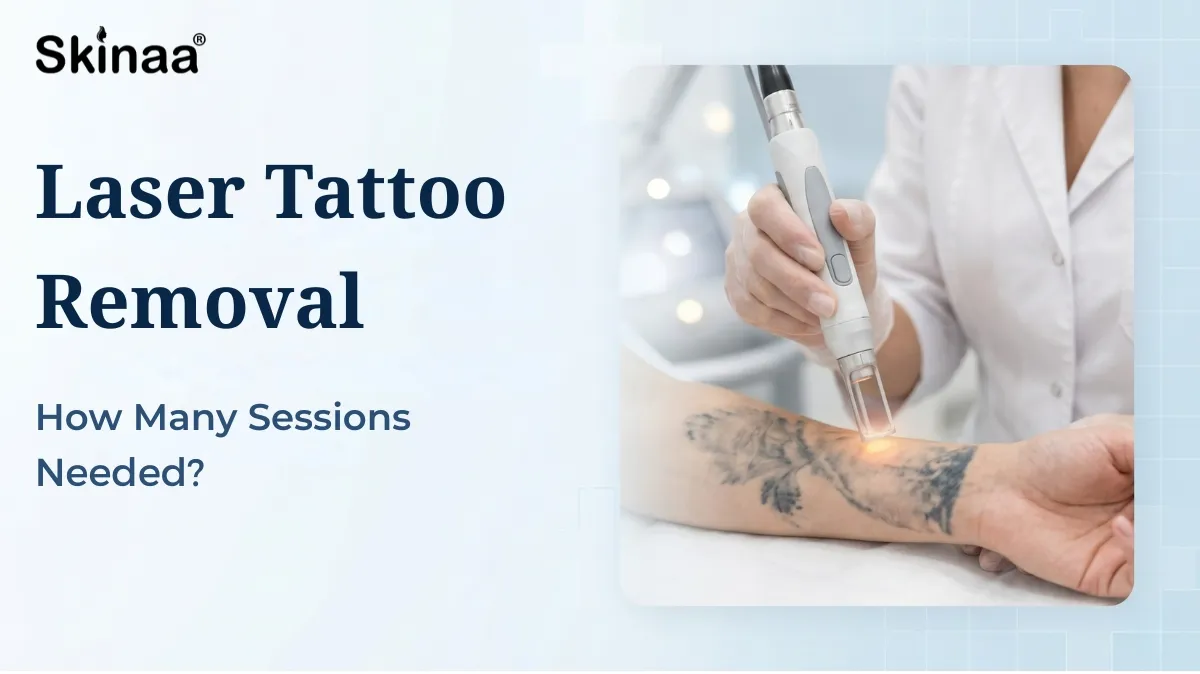
Getting a tattoo is often an emotional or impulsive decision. But over time, many people feel the need to remove it — whether due to lifestyle changes, career reasons, or simply a shift in personal preference.
The most common question patients ask is:
“How many sessions will it take to completely remove my tattoo?”
This is a practical concern. People want clarity before starting treatment.
The truth is, tattoo removal is not a one-session process. It depends on multiple factors like ink depth, color, skin type, and technology used.
At Skinaa Clinic, tattoo removal is approached with a clinical and customized plan, ensuring safe removal while minimizing skin damage.
How Laser Tattoo Removal Works (Clinical Understanding)
Laser tattoo removal works by targeting the ink particles present in the skin.
The laser emits high-energy light pulses that break down the ink into smaller fragments. Over time, the body’s natural immune system clears these fragments.
This process happens gradually. That is why multiple sessions are required to achieve visible fading.
Why Multiple Sessions Are Needed
Many patients expect tattoos to disappear quickly. However, tattoos are designed to be permanent, which makes removal more complex.
Each session breaks down a portion of the ink. The body then needs time to eliminate it.
Spacing between sessions is important because:
- The skin needs time to heal
- The immune system clears ink gradually
- Overlapping sessions can cause irritation
This is why treatment is done in a planned and step-by-step manner.
How Many Sessions Are Required?
There is no fixed number for everyone.
On average, most tattoos require multiple sessions for significant removal. However, the exact number depends on several factors.
Factors That Affect Number of Sessions
The depth of ink plays a major role. Professional tattoos are deeper and require more sessions compared to amateur tattoos.
Color also matters. Black ink is easier to remove, while colored inks like green or blue may take longer.
Skin type and healing ability influence the speed of removal. Some individuals respond faster than others.
Older tattoos are usually easier to remove because the ink has already started fading naturally.
What Results Can You Expect
Tattoo removal is a gradual process.
After each session, you will notice:
- Fading of the tattoo
- Reduction in ink intensity
- Blurred edges
Complete removal may take time, but significant improvement is usually visible with consistent treatment.
Is Complete Tattoo Removal Possible?
In many cases, tattoos can be removed almost completely.
However, results vary depending on:
- Ink type
- Skin response
- Number of sessions
In some cases, slight shadowing may remain, but it is usually minimal and much less noticeable than the original tattoo.
Does Tattoo Removal Hurt?
Laser tattoo removal may cause mild discomfort.
Patients often describe it as a snapping sensation on the skin. However, modern techniques and cooling methods make the procedure manageable.
Pain levels vary from person to person, but it is generally tolerable.
Real Problem-Solving Insight
One of the biggest mistakes patients make is expecting instant results.
Another issue is choosing low-cost or untrained providers. Improper laser use can lead to:
- Skin damage
- Scarring
- Pigmentation issues
Tattoo removal requires precision and expertise, not just equipment.
Choosing the right clinic is as important as choosing the treatment itself.
Aftercare and Recovery
After each session, the skin may appear slightly red or sensitive. This is normal and temporary.
Proper aftercare helps in faster healing and better results. Sun protection is essential, as exposure can affect skin recovery.
Following the dermatologist’s advice ensures smoother treatment progress.
Role of Skin Care During Treatment
Healthy skin responds better to laser treatment.
Maintaining a simple skincare routine and avoiding irritation supports healing.
Hydrated and well-maintained skin also improves overall results.
Why Choose Skinaa Clinic for Laser Tattoo Removal
At Skinaa Clinic, tattoo removal is done with a personalized and medically guided approach.
With over 13+ years of experience and 5 lakh+ patients treated, Skinaa offers:
- Advanced laser technology
- Customized treatment plans
- Safe protocols for all skin types
- Expert dermatological supervision
The focus is on achieving maximum tattoo removal with minimum skin damage.
When Should You Consider Tattoo Removal
You can consider tattoo removal if:
- You no longer want the tattoo
- It affects your professional or personal life
- You want to lighten it for a cover-up
Starting early often leads to better results.
Conclusion
Laser tattoo removal is an effective and scientifically proven method, but it requires patience and consistency.
The number of sessions depends on individual factors, and results improve gradually over time.
If you are planning tattoo removal and want safe, effective treatment, a proper consultation is essential. At Skinaa Clinic, treatments are designed to match your tattoo type and skin condition, ensuring visible and long-lasting results.
FAQs
1. How many sessions are needed for tattoo removal?
It depends on the tattoo, but multiple sessions are usually required.
2. Can tattoos be removed completely?
In many cases, yes, but results may vary.
3. Is laser tattoo removal safe?
Yes, when performed by experienced dermatologists.
4. How long does each session take?
It depends on tattoo size but is usually quick.
5. Will it leave scars?
When done correctly, the risk of scarring is minimal.