
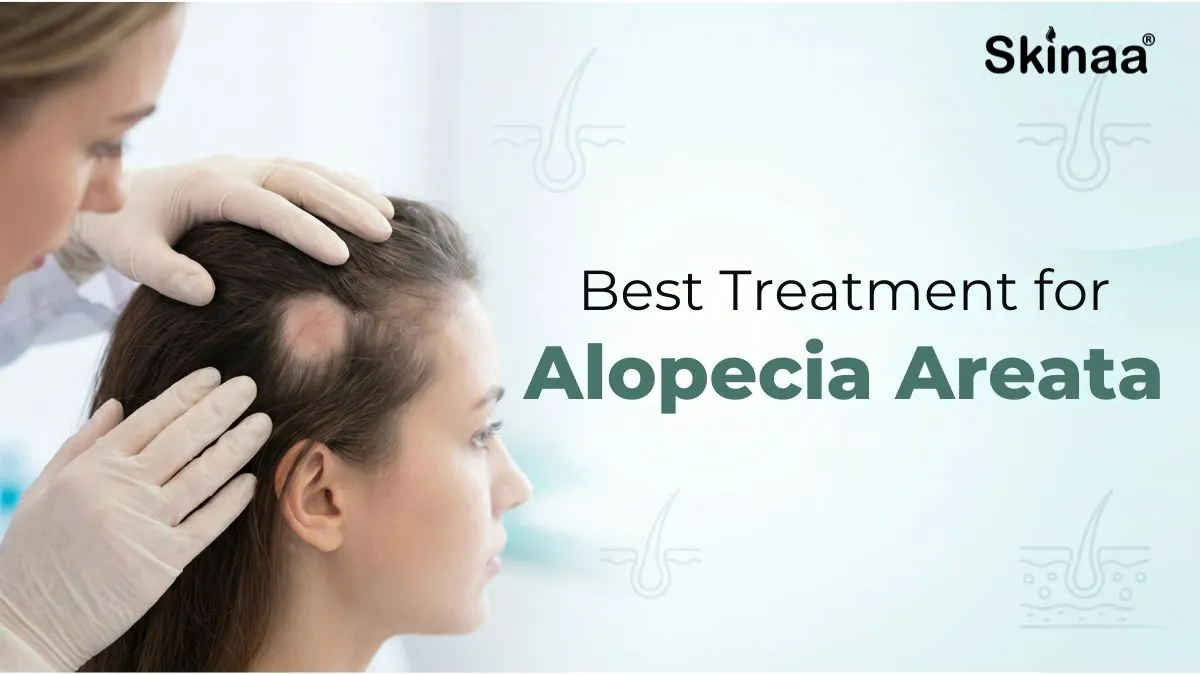
Alopecia Areata is one of the most confusing and emotionally challenging types of hair loss. Unlike gradual thinning, it often appears suddenly as patchy hair loss, leaving patients worried and unsure about the cause.
A common concern seen in clinics is:
“I suddenly noticed a bald patch. Will my hair grow back?”
The good news is that Alopecia Areata is treatable, and in many cases, hair regrowth is possible with the right approach.
However, it is important to understand that this condition is different from regular hair fall. It requires a specialized, medically guided treatment plan.
At Skinaa Clinic, Alopecia Areata is managed through accurate diagnosis, targeted therapy, and continuous monitoring, ensuring better control and recovery.
What is Alopecia Areata? (Clinical Understanding)
Alopecia Areata is an autoimmune condition where the body’s immune system mistakenly attacks hair follicles.
This leads to:
- Sudden patchy hair loss
- Smooth, round bald spots
- Hair fall in localized areas
In some cases, it may affect eyebrows, beard, or other body hair.
The key difference is that hair follicles are not permanently damaged, which means regrowth is possible with proper treatment.
Why Alopecia Areata Happens
The exact cause is not always clear, but several factors can trigger the condition.
The most important factor is immune system imbalance, where the body targets its own hair follicles.
Stress is also a significant trigger. Many patients notice hair loss after emotional or physical stress.
Genetic factors may increase the risk, and certain medical conditions can also be associated with it.
How is Alopecia Areata Different from Other Hair Loss
Alopecia Areata is different because it is not caused by hormones or nutrition alone.
Unlike pattern hair loss:
- It appears suddenly
- It causes patchy hair loss
- It involves immune system activity
This is why general hair fall treatments may not work effectively.
Best Treatment Options for Alopecia Areata
Treatment focuses on controlling the immune response and stimulating hair regrowth.
Medical Treatment (Primary Approach)
Dermatologists use medications to reduce inflammation and control immune activity around hair follicles.
This helps stop further hair loss and supports regrowth.
PRP Therapy (Supportive Treatment)
PRP helps stimulate hair follicles and improve scalp health.
It enhances the natural healing process and supports regrowth in affected areas.
Topical Treatments
Specially formulated solutions are used to:
- Strengthen hair roots
- Improve follicle activity
- Support regrowth
These treatments are often used alongside medical therapy.
Combination Treatment Approach
The most effective results come from combining treatments.
For example:
- Medical therapy to control the condition
- PRP to stimulate follicles
- Topical solutions for maintenance
This approach ensures better and more stable results.
Can Hair Regrow in Alopecia Areata?
Yes, hair regrowth is possible.
Since follicles are not permanently destroyed, they can become active again with the right treatment.
However, regrowth may take time and varies from person to person.
Early treatment increases the chances of faster recovery.
How Long Does Treatment Take
Alopecia Areata does not resolve overnight.
Initial regrowth may be seen in a few weeks to months. Full recovery depends on:
- Severity of the condition
- Treatment consistency
- Individual response
Patience and follow-up are essential.
Real Problem-Solving Insight
One of the biggest concerns patients have is fear of permanent hair loss.
In reality, most cases are manageable.
However, common mistakes include:
- Ignoring early patches
- Trying home remedies instead of medical treatment
- Stopping treatment too early
The correct approach is to start treatment early and follow a structured plan.
Role of Lifestyle and Stress Management
Stress plays a significant role in triggering and worsening Alopecia Areata.
Managing stress through proper sleep, diet, and lifestyle changes supports treatment outcomes.
A balanced diet also helps improve overall hair health.
Why Choose Skinaa Clinic for Alopecia Areata Treatment
At Skinaa Clinic, treatment is based on clinical expertise and personalized care.
With over 13+ years of experience and 5 lakh+ patients treated, Skinaa offers:
- Accurate diagnosis of Alopecia Areata
- Customized treatment plans
- Advanced therapies like PRP
- Continuous monitoring and follow-up
The goal is to control the condition and restore hair growth safely.
When Should You See a Dermatologist
You should consult a dermatologist if:
- You notice sudden bald patches
- Hair loss is localized and increasing
- Hair is not regrowing
- You are unsure about the condition
Early treatment improves results significantly.
Conclusion
Alopecia Areata may feel sudden and alarming, but it is a treatable condition.
With the right diagnosis and treatment approach, hair regrowth is possible in many cases.
If you are noticing patchy hair loss or sudden bald spots, it is important not to delay treatment. At Skinaa Clinic, treatment plans are designed to control the condition and support healthy hair regrowth with long-term stability.
FAQs
1. Is Alopecia Areata permanent?
No, in many cases hair regrows with proper treatment.
2. What causes Alopecia Areata?
It is caused by an autoimmune response affecting hair follicles.
3. Can stress trigger Alopecia Areata?
Yes, stress is a common trigger.
4. How long does it take for hair to regrow?
It may take a few weeks to months depending on the case.
5. Which treatment is best?
Combination treatment with medical therapy and PRP is often effective.