
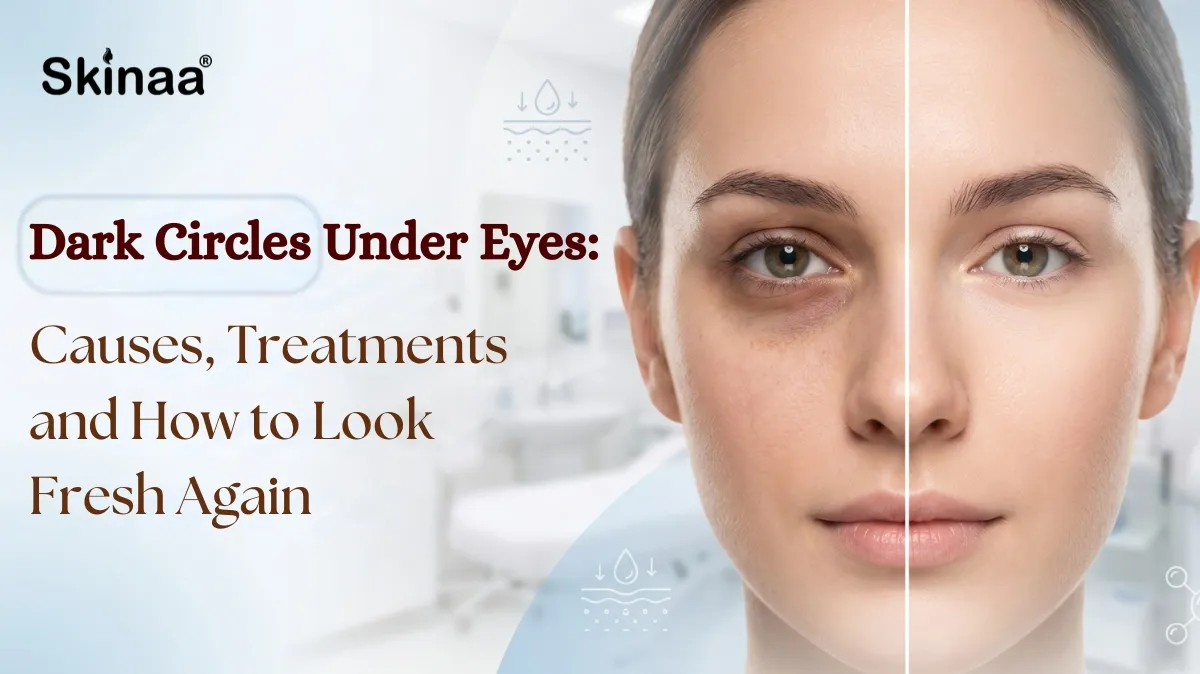
Dark circles are one of the most common yet frustrating skin concerns today. They can make you look tired, aged, and stressed—even when you feel completely fine.
With increasing screen time, poor sleep habits, and stressful lifestyles, dark circles are now affecting people at a much younger age.
While many try home remedies or creams, the results are often temporary or ineffective because dark circles are caused by multiple underlying factors.
Understanding the root cause is the first step towards choosing the right treatment.
In this guide, you will learn what causes dark circles, how they can be treated, and what really works for long-term improvement.
What Are Dark Circles
Dark circles refer to the darkening of the skin under the eyes, often accompanied by puffiness or hollow appearance.
The skin under the eyes is thinner and more sensitive than the rest of the face, making it more prone to pigmentation, blood vessel visibility, and volume loss.
Depending on the cause, dark circles may appear brown, blue, or purple in color
Common Causes of Dark Circles
Dark circles are not caused by a single factor. Multiple reasons can contribute to their appearance.
Lack of sleep is one of the most common causes, as it leads to dull skin and visible blood vessels. Excessive screen time causes eye strain, which worsens under-eye darkness.
Genetics also play a major role, making some individuals more prone to dark circles. Dehydration can make the under-eye area look sunken and darker.
Sun exposure increases melanin production, leading to pigmentation under the eyes. Stress, poor diet, and lifestyle habits like smoking or excessive caffeine intake can also contribute to the problem
Types of Dark Circles
Understanding the type of dark circle helps in choosing the right treatment.
Pigmented dark circles appear brown due to excess melanin. Vascular dark circles appear bluish or purple due to visible blood vessels.
Hollow or structural dark circles are caused by volume loss under the eyes, creating shadows.
Often, a combination of these types is present, which is why personalized treatment is important.
How Dark Circles Are Diagnosed
A dermatologist evaluates the under-eye area to determine the type and cause of dark circles.
Factors like skin thickness, pigmentation, lifestyle habits, and medical history are considered before recommending treatment.
Correct diagnosis ensures effective and long-lasting results.
Effective Treatments for Dark Circles
Dark circles require a combination of treatments depending on their cause and severity.
Topical Treatments
Creams containing ingredients like vitamin C, retinol, and under-eye brightening agents help improve pigmentation and skin quality.
Chemical Peels
Mild chemical peels can help reduce pigmentation and improve skin tone under the eyes.
Laser Treatments
Laser therapy targets pigmentation and improves skin texture, making the under-eye area appear brighter.
Fillers
In cases of hollow under-eyes, fillers help restore volume and reduce shadowing.
Micro-Pigmentation
This technique helps even out skin tone and reduce the appearance of dark circles.
These treatments are often combined for better and more visible results
Lifestyle Changes That Help Reduce Dark Circles
Medical treatments work best when supported by healthy lifestyle habits.
Getting adequate sleep is essential to allow skin repair and reduce under-eye darkness. Reducing screen time helps prevent eye strain.
Staying hydrated improves skin elasticity and reduces dullness. A balanced diet rich in vitamins and antioxidants supports skin health.
Managing stress through relaxation techniques can also improve overall skin appearance
Can Dark Circles Be Permanently Removed
Dark circles can be significantly reduced, but complete removal depends on their cause.
With proper treatment, skincare, and lifestyle changes, long-term improvement is achievable.
Consistency and correct diagnosis are key to maintaining results.
When to Consult a Dermatologist
You should consult a dermatologist if:
- Dark circles are becoming more noticeable
- Home remedies are not working
- There is puffiness or hollowness under the eyes
- The condition is affecting your confidence
Professional treatment ensures faster and more effective results.
Frequently Asked Questions
What is the main cause of dark circles
The most common causes include lack of sleep, genetics, screen time, and pigmentation.
Can dark circles go away naturally
Mild dark circles may improve with lifestyle changes, but most cases require treatment.
Which treatment is best for dark circles
The best treatment depends on the cause and may include creams, lasers, or fillers.
Does drinking water reduce dark circles
Hydration helps improve skin quality and can reduce the appearance of dark circles.
Are dark circles permanent
They are not always permanent and can be improved with the right treatment approach.
Can lack of sleep cause dark circles
Yes, poor sleep is one of the leading causes of under-eye dark circles.
Why Choose Skinaa Clinic for Dark Circles Treatment
Treating dark circles effectively requires identifying the exact cause and selecting the right combination of treatments.
At Skinaa Clinic, a detailed under-eye assessment is performed to understand whether the concern is due to pigmentation, volume loss, or vascular issues.
Key advantages include:
- Personalized diagnosis based on type of dark circles
- Advanced treatments including lasers, peels, and fillers
- Combination therapy approach for better and faster results
- Experienced dermatologists with expertise in under-eye concerns
- Focus on natural-looking improvement without overcorrection
The goal is to restore a fresher, well-rested appearance while improving overall skin quality.
Get Back Your Fresh and Well-Rested Look
Dark circles can make you look more tired than you actually feel, but the right treatment can help you regain a brighter and more refreshed appearance.
Instead of relying on temporary fixes, choosing a medically guided approach can deliver long-term results.
If you are struggling with under-eye pigmentation or tired-looking eyes, consult the experts at Skinaa Clinic and take the first step towards clearer, healthier skin.