
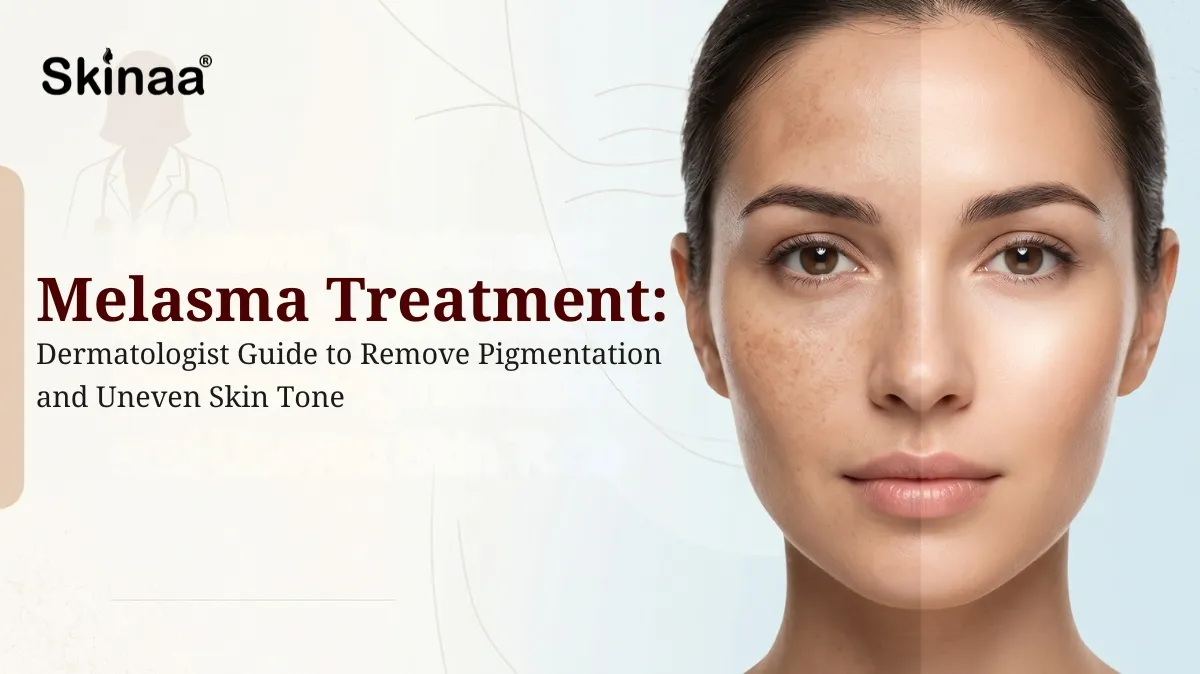
Melasma is one of the most common pigmentation concerns, especially in individuals exposed to high sun intensity and hormonal changes. It appears as dark patches on the face and can significantly affect overall skin tone and confidence.
Many people try home remedies or random skincare products, but melasma is a complex condition that requires a structured and medically guided approach.
The right treatment can help reduce pigmentation, improve skin clarity, and prevent recurrence.
In this guide, you will understand what melasma is, why it happens, and the most effective dermatologist-approved treatments available today.
What is Melasma
Melasma is a skin condition characterized by dark, discolored patches that usually appear on the face, particularly on the cheeks, forehead, nose, and upper lip.
It is often referred to as the “mask of pregnancy” because it commonly occurs due to hormonal changes, especially in women.
Melasma is not harmful, but it is a chronic condition that can be difficult to treat without proper medical care
Common Symptoms of Melasma
Melasma mainly affects facial appearance and presents as visible pigmentation.
Brown or greyish patches on the cheeks, forehead, or nose
Uneven skin tone and dull complexion
Symmetrical pigmentation on both sides of the face
Darkening of skin after sun exposure
Unlike other skin conditions, melasma is usually not itchy or painful but can worsen over time if ignored
What Causes Melasma
Melasma is caused by excess production of melanin, the pigment responsible for skin color.
Several factors contribute to this condition.
Hormonal changes, especially during pregnancy or due to birth control pills, are one of the major causes. Sun exposure is another key trigger, as UV rays stimulate melanin production.
Genetic predisposition also plays a role, meaning individuals with a family history are more likely to develop melasma.
Other contributing factors include stress, thyroid disorders, and certain medications
Types of Melasma
Melasma can vary depending on the depth of pigmentation.
Epidermal melasma affects the upper layers of the skin and is usually easier to treat. Dermal melasma involves deeper layers and may require advanced treatments.
Mixed melasma is a combination of both and often requires a customized treatment approach.
Understanding the type of melasma helps in selecting the most effective treatment plan.
How Melasma is Diagnosed
Melasma is diagnosed through clinical examination by a dermatologist.
In some cases, tools like Wood’s lamp examination are used to determine the depth of pigmentation.
Accurate diagnosis is essential because different types of pigmentation require different treatment approaches.
Melasma Treatment Options
Melasma requires a combination of treatments for effective results.
Topical Medical Treatments
Dermatologists prescribe creams containing ingredients like hydroquinone, tretinoin, and other depigmenting agents that help reduce melanin production.
Chemical Peels
Chemical peels exfoliate the upper layer of the skin, helping remove excess pigmentation and improve skin tone.
Laser and Light Therapies
Advanced treatments like laser therapy and IPL target melanin deposits and help break down pigmentation.
Sun Protection (Most Important)
Strict sun protection with sunscreen is essential to prevent worsening and recurrence of melasma.
A personalized combination of these treatments delivers the best outcomes
Can Melasma Be Permanently Cured
Melasma is a chronic condition, which means it may not be permanently cured. However, it can be effectively managed and significantly reduced with the right treatment and maintenance.
Consistency in treatment and proper skincare plays a major role in long-term control.
Daily Care Tips for Melasma
Managing melasma requires consistent skincare and lifestyle habits.
Using sunscreen daily is the most important step in preventing pigmentation. Avoiding direct sun exposure and using protective clothing can help reduce flare-ups.
Gentle skincare products should be used to avoid irritation, as harsh products can worsen pigmentation.
Maintaining a healthy lifestyle and managing stress also contributes to better skin health.
When to Consult a Dermatologist
Melasma should not be treated with random products or home remedies.
You should consult a dermatologist if:
Pigmentation is increasing or spreading
Skin tone is becoming uneven
The condition is affecting confidence
Early and correct treatment prevents long-term pigmentation issues.
Frequently Asked Questions
What is the main cause of melasma
Melasma is mainly caused by hormonal changes, sun exposure, and genetic factors.
Can melasma go away on its own
In some cases, it may fade, but most often it requires treatment to improve significantly.
Is melasma permanent
Melasma is a chronic condition but can be controlled and reduced with proper treatment.
Which treatment is best for melasma
A combination of topical treatments, chemical peels, and laser therapy is often most effective.
Does sunscreen help in melasma
Yes, sunscreen is essential to prevent worsening and recurrence of melasma.
Can melasma return after treatment
Yes, it can return if proper maintenance and sun protection are not followed.
Why Choose Skinaa Clinic for Melasma Treatment
Treating melasma requires precision, consistency, and a personalized approach rather than a generic skincare routine.
At Skinaa Clinic, treatment plans are designed after a detailed skin evaluation to understand the depth, type, and cause of pigmentation.
Key advantages include:
- Personalized pigmentation analysis and diagnosis
- Advanced treatment options including chemical peels, lasers, and medical therapy
- Combination treatment approach for faster and more effective results
- Experienced dermatologists with expertise in pigmentation management
- Focus on reducing recurrence and maintaining long-term skin clarity
The goal is not just to lighten pigmentation but to restore even skin tone with sustainable results.
Restore Clear and Even Skin with Expert Care
Melasma can be frustrating, especially when it keeps coming back or does not respond to regular skincare.
With the right medical approach, it is possible to control pigmentation, improve skin tone, and regain confidence.
If you are dealing with stubborn dark patches or uneven skin tone, consult the experts at Skinaa Clinic and begin your journey towards clearer, healthier skin with a treatment plan tailored to your needs.