
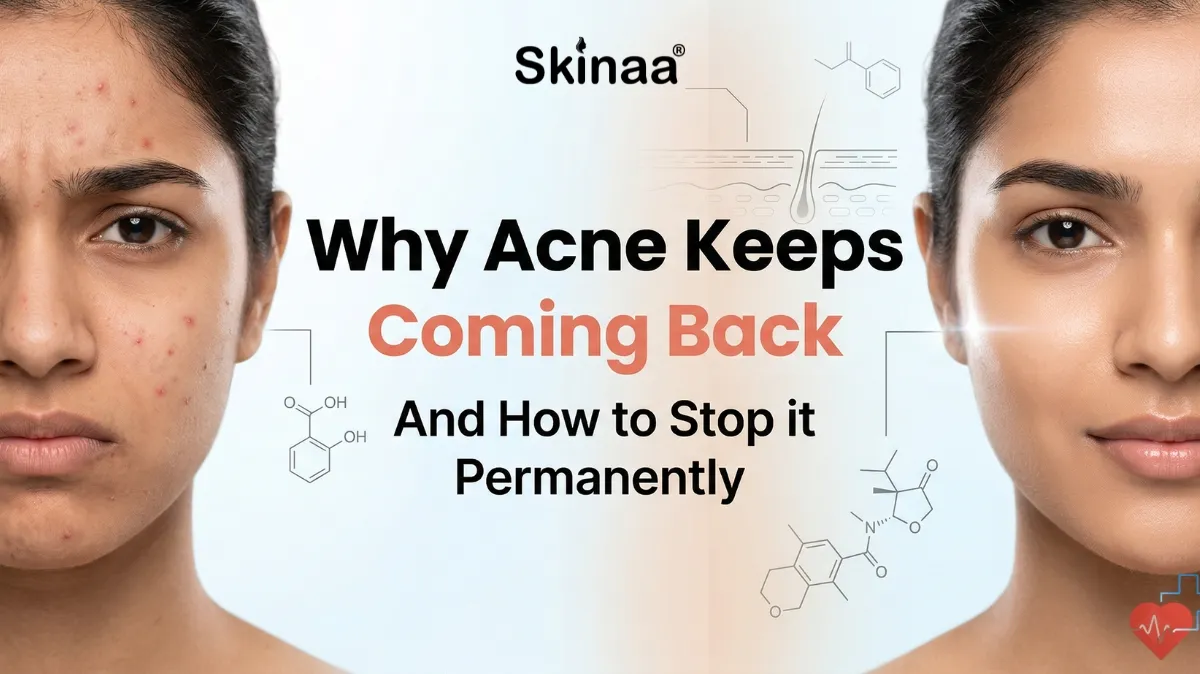
One of the most frustrating experiences for acne patients is this:
“It goes away… and then it comes back again.”
You try face washes, creams, and even treatments that seem to work temporarily — but within weeks, the breakouts return. This cycle can feel endless.
The reality is, acne is not just a surface-level issue. It is a chronic skin condition influenced by internal and external factors, and unless the root cause is addressed, it keeps recurring.
At Skinaa Clinic, dermatologists focus on identifying why acne is coming back and creating a long-term, result-oriented treatment plan — not just temporary fixes.
Why Acne Keeps Coming Back
1. Root Cause is Not Treated
Most people focus only on treating visible pimples, not the underlying cause. Acne may be triggered by hormones, excess oil production, bacterial growth, or lifestyle factors.
If the root issue is not addressed, acne will return — even after temporary improvement.
2. Hormonal Imbalance
Hormones are one of the biggest reasons behind recurring acne, especially in adults. Fluctuations during periods, stress, PCOS, or thyroid issues can trigger repeated breakouts.
Hormonal acne typically appears around the jawline, chin, and lower face.
3. Incorrect Skincare Routine
Using the wrong products can silently worsen acne. Heavy creams, oily sunscreens, or harsh face washes can clog pores or irritate the skin.
Even over-exfoliation can damage the skin barrier, making acne worse.
4. Stopping Treatment Too Early
This is a very common mistake. Patients stop treatment as soon as acne improves, without completing the full course.
Acne treatment requires consistency. Incomplete treatment allows the condition to return.
5. Lifestyle & Diet Triggers
Stress, poor sleep, and certain dietary habits (like high sugar or dairy intake) can trigger acne repeatedly in some individuals.
6. Bacterial Resistance
Overuse of antibiotics or self-medication can lead to resistance, making acne harder to treat over time.
Why Home Remedies Often Fail
Many patients rely on DIY remedies or trending skincare advice. While some may provide temporary relief, they rarely address the root cause.
Acne is a medical condition, and treating it without proper diagnosis often leads to:
- Delayed results
- Worsening of acne
- Increased risk of scarring
How to Stop Acne Permanently (Dermatologist Approach)
1. Proper Diagnosis
The first step is understanding your acne type and cause. This includes evaluating your skin, medical history, and lifestyle.
At Skinaa Clinic, dermatologists perform a detailed skin assessment before starting treatment.
2. Medical Treatment Plan
Based on the diagnosis, dermatologists may prescribe targeted treatments to control oil production, bacteria, and inflammation.
This step is essential to bring acne under control from within.
3. Advanced Clinic Treatments
For faster and more effective results, in-clinic procedures may be recommended. These help in reducing active acne and preventing future breakouts.
Treatments may include chemical peels, laser therapy, or other advanced dermatological procedures.
4. Customized Skincare Routine
Using the right skincare products is crucial. A dermatologist-recommended routine helps maintain results and prevents recurrence.
This usually includes a gentle cleanser, non-comedogenic moisturizer, sunscreen, and targeted treatments.
5. Lifestyle Correction
Managing stress, improving sleep, and maintaining a balanced diet can significantly reduce acne triggers.
6. Maintenance Therapy
Even after acne is controlled, maintenance treatment is important to prevent it from coming back.
This is where most people fail — they stop everything once their skin improves.
Real Problem-Solving Insight
If your acne keeps coming back, it is not because your skin is “bad” — it is because the treatment approach is incomplete or incorrect.
The solution is not trying more products. The solution is:
- Correct diagnosis
- Consistent treatment
- Long-term maintenance
Why Choose Skinaa Clinic for Acne Treatment
At Skinaa Clinic, the goal is not just to treat acne temporarily but to stop it from recurring.
With over 13+ years of dermatology expertise and 5 lakh+ patients treated, Skinaa offers a combination of:
- Scientific diagnosis
- Personalized treatment plans
- Advanced clinical procedures
- Dermatologist-guided skincare
Each treatment plan is tailored to ensure long-term skin health and visible improvement.
Role of Products in Preventing Acne Recurrence
Using the right products can make a huge difference in maintaining results.
Dermatologists at Skinaa recommend products that:
- Control excess oil
- Prevent clogged pores
- Support skin barrier repair
Avoid experimenting with random products, as they can trigger breakouts again.
When Should You See a Dermatologist?
You should consult a dermatologist if:
- Acne keeps coming back despite treatment
- Breakouts are becoming more severe
- You are developing scars or marks
- Over-the-counter products are not working
Early intervention prevents long-term damage and reduces treatment time.
Recurring acne is not something you have to live with. It is a treatable condition — but only when approached correctly.
By addressing the root cause, following a structured treatment plan, and maintaining proper skincare, acne can be effectively controlled and prevented.
If you are tired of temporary solutions, it’s time to switch to a doctor-backed, long-term approach.
Take the First Step Towards Clear Skin
Stop the cycle of recurring acne with expert care. Book your consultation at Skinaa Clinic and get a personalized treatment plan designed to give you long-lasting results.
FAQs
1. Why does my acne keep coming back even after treatment?
Because the root cause is not fully addressed or treatment is stopped too early.
2. Can acne be stopped permanently?
Acne can be effectively controlled and prevented with proper treatment and maintenance.
3. Does diet really affect acne?
In some individuals, certain foods can trigger acne, especially high sugar and dairy.
4. How long does it take to stop recurring acne?
It depends on the cause, but consistent treatment usually shows improvement within a few weeks.
5. Is skincare alone enough to stop acne?
No, skincare helps, but medical treatment is often required for long-term control.