
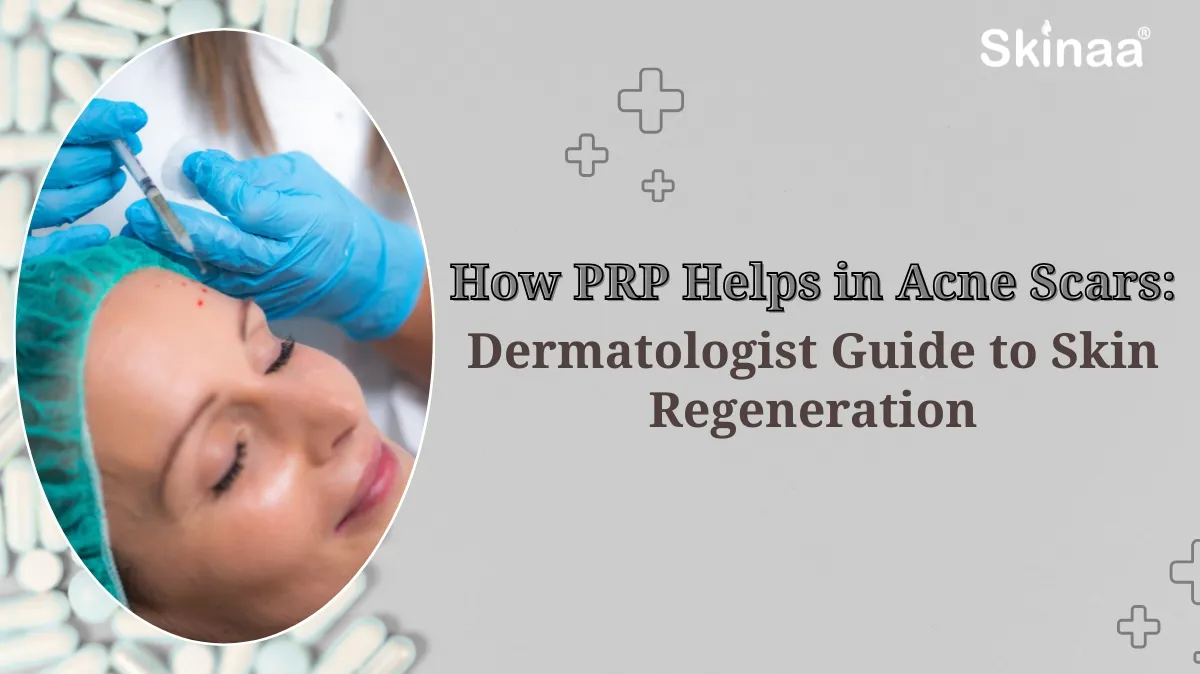
For many patients, acne is only the first part of the problem. Even after breakouts reduce, acne scars remain, affecting skin texture, tone, and confidence.
A common concern seen in clinical practice is:
“My acne is gone, but the marks and scars are still there.”
Many people try creams, home remedies, or trending products, expecting scars to fade on their own. While mild marks may improve over time, deeper acne scars require targeted dermatological treatment.
One of the most effective and increasingly recommended treatments in modern dermatology is PRP (Platelet-Rich Plasma) therapy.
At Skinaa Clinic, PRP is used as a bio-stimulating treatment to repair damaged skin, improve collagen, and reduce acne scars naturally.
What Are Acne Scars? (Clinical Understanding)
Acne scars form when inflammation damages the deeper layers of the skin, affecting collagen and tissue structure.
Depending on severity, scars may appear as:
- Depressed or indented scars
- Uneven skin texture
- Persistent marks or pigmentation
Unlike surface-level acne, scars involve structural damage, which is why they cannot be treated effectively with basic skincare alone.
What is PRP Therapy?
PRP (Platelet-Rich Plasma) is a treatment derived from your own blood. It contains a high concentration of platelets and growth factors, which play a key role in healing and tissue regeneration.
In dermatology, PRP is used to:
- Stimulate collagen production
- Repair damaged skin
- Improve overall skin quality
Because it uses your own blood, PRP is considered safe, natural, and biologically compatible.
How PRP Works for Acne Scars
PRP works at a deeper level compared to creams or surface treatments.
The process involves drawing a small amount of blood, processing it to extract platelet-rich plasma, and then applying or injecting it into the affected areas.
Once applied, PRP:
- Activates skin regeneration
- Stimulates collagen and elastin
- Repairs damaged tissue
- Improves skin texture and tone
Over time, this leads to smoother, more even skin.
Why PRP is Effective for Acne Scars
From a clinical perspective, PRP is effective because it addresses the root problem — collagen loss and skin damage.
Natural Healing Mechanism
PRP enhances the body’s own repair process instead of relying on external chemicals.
Collagen Stimulation
Collagen is essential for smooth and healthy skin. PRP boosts collagen production, helping to fill and improve depressed scars.
Improved Skin Texture
With repeated sessions, patients notice visible improvement in skin smoothness and uniformity.
Safe and Biocompatible
Since PRP is derived from your own blood, the risk of allergic reactions is minimal.
Who is the Right Candidate for PRP?
PRP is suitable for:
- Patients with acne scars or uneven texture
- Individuals with dull or damaged skin
- Those looking for a natural, non-surgical treatment
It is especially beneficial for patients who want gradual, natural-looking improvement.
PRP vs Other Acne Scar Treatments
PRP is often compared with treatments like laser or chemical peels.
- Chemical peels work on the surface and are useful for mild scars
- Laser treatments target deeper layers and provide faster results
- PRP focuses on skin regeneration from within
In many cases, dermatologists recommend combining PRP with other treatments for optimal results.
PRP as Part of Combination Therapy
At Skinaa Clinic, PRP is often combined with treatments like microneedling or MNRF for enhanced results.
This combination:
- Improves absorption of PRP
- Enhances collagen stimulation
- Delivers faster and more visible improvement
This approach is considered one of the most effective strategies for acne scar treatment in modern dermatology.
Real Problem-Solving Insight
Many patients expect scars to fade with time or products, but deeper scars require clinical intervention.
If your skin feels uneven or textured even after acne has cleared, the issue is not active acne — it is skin damage that needs repair.
PRP works by addressing this exact problem, making it a reliable solution for long-term improvement.
Role of Skincare Along with PRP
PRP treatment works best when supported by proper skincare.
Dermatologists recommend:
- Gentle cleansers to avoid irritation
- Sunscreen to protect healing skin
- Targeted serums (only under guidance)
Using the wrong products can slow down recovery or trigger new acne.
Why Choose Skinaa Clinic for PRP Treatment
At Skinaa Clinic, PRP treatments are performed with a focus on precision, safety, and personalized care.
With over 13+ years of experience and 5 lakh+ patients treated, Skinaa offers:
- Advanced PRP technology
- Expert dermatological supervision
- Customized treatment plans
- Combination therapies for better results
The goal is not just to reduce scars but to restore healthy, smooth skin.
When Should You Consider PRP for Acne Scars
You should consider PRP if:
- Acne scars are visible and persistent
- Skin texture feels uneven
- Marks are not improving with products
- You want a natural, non-invasive treatment
Conclusion
Acne scars require a different approach than active acne. Treatments like PRP offer a scientifically proven way to repair skin from within and improve texture over time.
With proper diagnosis and expert guidance, PRP can deliver visible, long-lasting results.
Take the First Step Towards Smooth Skin
If acne scars are affecting your confidence, consult the experts at Skinaa Clinic. Get a personalized treatment plan and start your journey towards clearer, healthier skin.
FAQs
1. Is PRP effective for acne scars?
Yes, PRP helps improve acne scars by stimulating collagen and skin repair.
2. How many PRP sessions are needed?
Multiple sessions are usually required for best results.
3. Is PRP safe?
Yes, PRP is safe as it uses your own blood.
4. Does PRP remove scars completely?
It significantly improves scars, but complete removal depends on severity.
5. Can PRP be combined with other treatments?
Yes, it is often combined with microneedling or MNRF for better results.