
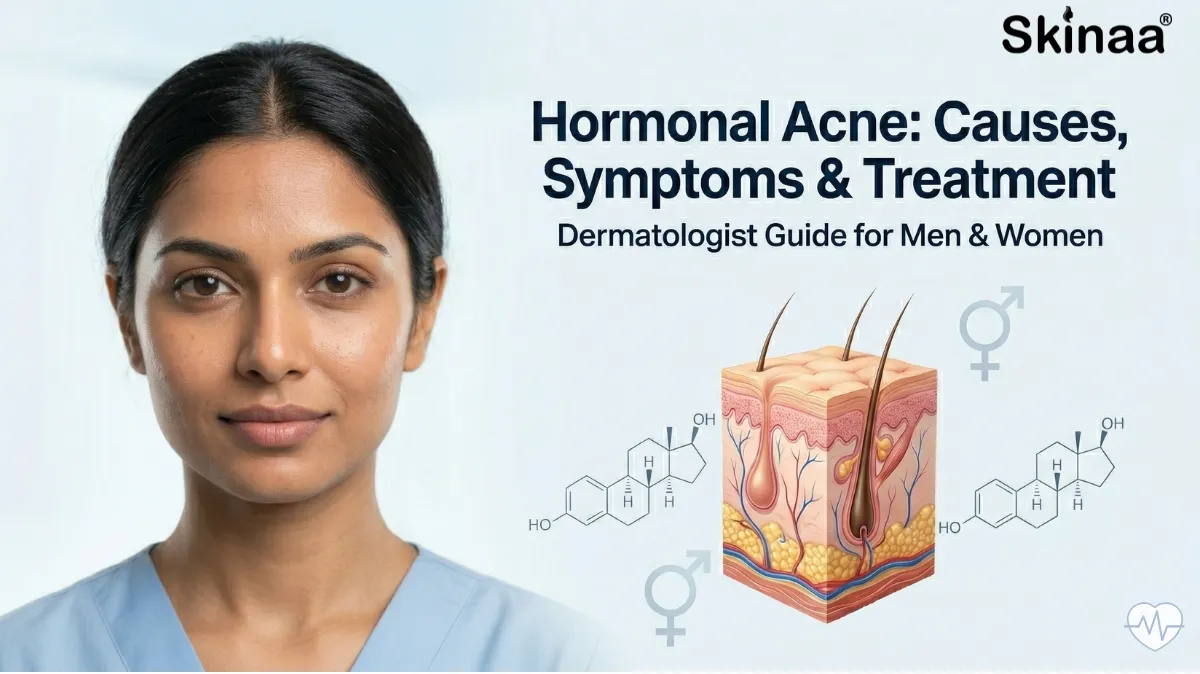
Introduction: The Acne That Keeps Coming Back
You clear your acne… and just when you think it’s gone, it comes back again — same spot, same pain.
This is not coincidence. This is hormonal acne.
In clinical practice, one pattern stands out very clearly. Patients don’t complain about acne appearing once — they complain about acne that never truly leaves. It improves, then relapses. And that cycle continues.
At Skinaa Clinic, this recurring pattern is one of the strongest indicators that the problem is not just on the skin surface, but linked to internal hormonal activity.
What is Hormonal Acne?
Hormonal acne is driven by internal hormonal imbalance, especially involving androgens that stimulate oil glands. This excess oil leads to clogged pores, bacterial growth, and inflammation.
Unlike regular acne, hormonal acne behaves differently. It is:
- More persistent
- More inflammatory
- Pattern-based rather than random
It is commonly seen in adult acne, especially after the age of 25–30, where patients either continue to have acne or suddenly start developing it without any prior history.
Clinically, it is most often seen on the jawline, chin, lower cheeks, and neck, and tends to be deeper and more painful than surface-level acne.
Post-30 Acne: When Acne Starts Later in Life
One of the most confusing situations for patients is developing acne after the age of thirty.
Many people say, “I never had acne before, why now?”
The answer usually lies in hormonal changes.
As the body ages, subtle hormonal shifts begin to occur. In women, this may be linked to menstrual irregularities or PCOS. In men, it may be related to androgen activity or metabolic imbalance. Along with this, stress, poor sleep, and lifestyle changes further aggravate the condition.
This is why post-30 acne is rarely “normal acne.” In most cases, it is hormonal in nature and requires a different approach.
Causes of Hormonal Acne (What Actually Triggers It)
Hormonal acne is not caused by a single factor. It develops due to a combination of internal triggers working together.
The key contributors include:
- Increased androgen activity leading to excess oil production
- Hormonal fluctuations, especially during menstrual cycles or PCOS
- Chronic stress increasing cortisol and inflammation
- Underlying hormonal imbalance in both men and women
- Lifestyle factors like poor sleep and high sugar intake
In men, hormonal acne is often under-recognised. Some individuals have higher androgen sensitivity or metabolic imbalance, which leads to recurring acne.
How to Identify Hormonal Acne
Hormonal acne has a very recognisable pattern if you know what to look for.
It typically appears on the lower part of the face, especially the jawline and chin. The acne is not superficial; it is deeper, often painful, and may feel like a lump under the skin.
Common signs include:
- Breakouts in the same area repeatedly
- Deep, cystic or painful acne
- Acne that does not respond to basic skincare
In women, flare-ups are often noticed before periods. In both men and women, these lesions are more likely to leave marks or pigmentation if left untreated.
Other Clinical Findings (How Dermatologists Confirm It)
Beyond visible acne, dermatologists look for subtle clinical signs that indicate a hormonal cause.
These may include:
- Acne starting in adulthood
- Resistance to standard skincare products
- Consistent pattern of breakouts
- Associated hair fall or irregular cycles (in females)
These findings help differentiate hormonal acne from general acne and guide the treatment plan.
Hormonal Acne vs Normal Acne
This is where most patients get confused.
Normal acne is usually triggered by external factors such as oil buildup, dirt, or improper skincare. It tends to respond well to topical treatments and does not follow a strict pattern.
Hormonal acne, however, is internally driven. It is:
- Deeper and more painful
- Recurrent in the same areas
- Resistant to over-the-counter products
This is why many patients feel that nothing is working, when in reality, the treatment approach is not targeting the root cause.
Why Hormonal Acne is More Common in Females
Hormonal acne is more frequently seen in women because of constant hormonal fluctuations.
The menstrual cycle plays a major role, with breakouts commonly appearing before periods. Conditions like PCOS further increase androgen levels, making acne more severe and long-lasting.
Pregnancy and postpartum hormonal shifts also influence acne patterns.
However, it is important to note that men are not immune to hormonal acne. It is simply less discussed and often misclassified as regular acne.
Why Hormonal Acne is Difficult to Treat
The biggest challenge with hormonal acne is that the trigger lies inside the body.
Most patients rely on skincare products alone, expecting permanent results. While these products may reduce acne temporarily, they do not address the underlying hormonal imbalance.
This leads to:
- Temporary improvement
- Frequent recurrence
To break this cycle, treatment must target both the internal cause and the external symptoms.
Dermatologist Treatment Approach
At Skinaa Clinic, hormonal acne is treated using a structured and personalised approach based on clinical diagnosis.
The treatment usually includes:
- Medical management to control oil, inflammation, and hormones
- Clinical procedures like peels or laser for faster results
- Dermatologist-guided skincare for maintenance
Lifestyle correction is also advised as a supportive measure. Most importantly, maintenance therapy is required even after improvement, as hormonal acne has a tendency to relapse.
Role of Skincare Products in Hormonal Acne
Skincare alone cannot cure hormonal acne because the root cause is internal. However, the right products play an important supportive role in controlling breakouts and maintaining results.
A proper routine helps:
- Regulate oil production
- Prevent clogged pores
- Reduce inflammation
At Skinaa Clinic, skincare is always combined with medical treatment to ensure better and long-lasting results.
Real Clinical Insight
A common statement heard in clinics is, “I’ve tried everything, but nothing works.”
In reality, the issue is not lack of effort, but lack of correct diagnosis. Hormonal acne cannot be treated through trial and error.
Once the root cause is addressed, patients experience not just improvement, but stability.
When to Consult a Dermatologist
If your acne keeps coming back, becomes painful, or starts leaving marks, it is important to seek professional help.
Early consultation helps:
- Prevent scarring
- Reduce pigmentation
- Improve long-term outcomes
Why Choose Skinaa Clinic for Hormonal Acne Treatment
Skinaa Clinic brings a strong foundation of dermatological expertise with over 13+ years of experience and 5 lakh+ patients treated.
What differentiates Skinaa:
- Evidence-based diagnosis
- Personalized treatment protocols
- Combination of medical + procedural care
- Continuous patient monitoring
The focus is on long-term skin stability, not temporary cosmetic improvement.
Conclusion
Hormonal acne is not just a cosmetic concern. It is a medically driven condition that requires the right diagnosis and treatment.
With a structured approach, it can be effectively controlled. The key is to move away from random product trials and towards expert-guided care.
Consultation
If your acne is recurring, painful, or not responding to products, consult the experts at Skinaa Clinic and start a treatment plan designed for long-term results.