
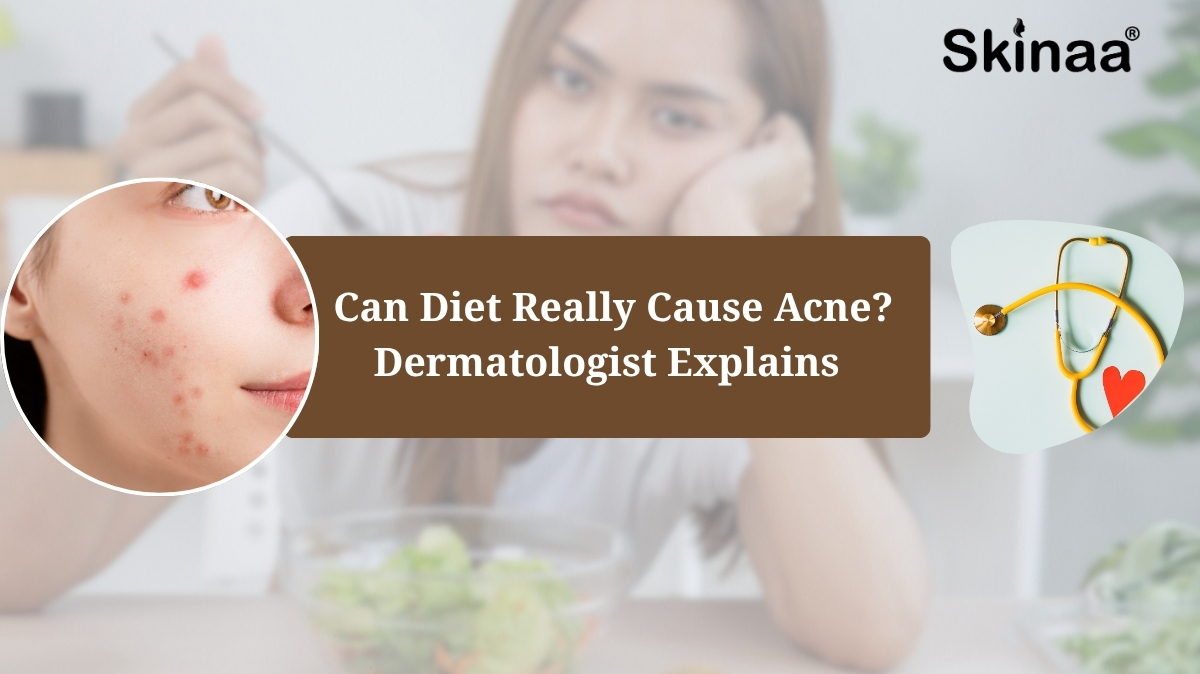
Introduction
Many people struggling with acne start believing that food is the main culprit. It is very common to see patients completely cutting off dairy, oily food, sugar, or even entire meals, assuming that avoiding certain foods will permanently solve their acne.
In clinical practice, however, the reality is different. Some patients follow strict diets yet continue to experience breakouts, while others eat normally and have minimal acne. This often leads to confusion and frustration.
The truth is that acne is not caused by a single factor like diet. It is a multifactorial skin condition, where internal processes such as hormones, oil production, and inflammation play a major role.
At Skinaa Clinic, dermatologists approach acne with a scientific and evidence-based understanding, helping patients identify whether diet is actually contributing to their acne or not.
Does Diet Actually Cause Acne? (Medical Perspective)
Diet alone does not directly cause acne, but it can influence certain biological processes in the body that may worsen breakouts.
Acne develops due to:
- Excess oil production
- Clogged pores
- Bacterial growth
- Inflammation
Certain foods can impact hormones and insulin levels, which may indirectly increase oil production and inflammation.
This means that diet is not the root cause in most cases, but it can act as a trigger in specific individuals.
Foods That May Trigger Acne
High Glycaemic Foods (Sugar and Refined Carbs)
Foods such as sweets, white bread, sugary drinks, and processed snacks can spike blood sugar levels. This leads to increased insulin, which may stimulate oil glands and worsen acne.
Dairy Products
Milk and dairy products may influence hormonal pathways in some individuals. However, this effect is not universal and varies from person to person.
Processed and Fast Foods
Highly processed foods may promote inflammation, which can aggravate acne in certain cases.
Whey Protein Supplements
Whey protein, commonly used for muscle building, has been associated with acne in some individuals due to its effect on insulin and hormonal activity.
Foods That Support Skin Health
A balanced diet supports overall skin function and reduces inflammation.
This includes:
- Fresh fruits and vegetables
- Whole grains
- Healthy fats such as nuts and seeds
- Adequate water intake
While these do not “cure” acne, they help in maintaining better skin health.
Why Diet Alone Cannot Cure Acne
A common misconception is that eliminating certain foods will completely resolve acne.
From a dermatological perspective:
- Acne is influenced by hormones and genetics
- Oil production is biologically regulated
- Bacterial activity contributes to inflammation
This is why many patients who follow strict dietary restrictions still experience acne.
Diet can support treatment, but it is not a standalone solution.
When Diet is Actually Affecting Your Acne
Diet may play a role if:
- Breakouts increase after specific foods
- There is a high intake of sugar or processed foods
- Acne is mild but persistent
- Lifestyle habits are inconsistent
In moderate to severe acne, diet alone is usually not sufficient, and medical treatment becomes necessary.
Dermatologist Approach to Diet and Acne
At Skinaa Clinic, diet is evaluated as part of a broader treatment plan rather than treated as the sole cause.
Clinical Assessment
Dermatologists first understand the type and severity of acne along with medical and lifestyle history.
Identifying Individual Triggers
Instead of general restrictions, specific dietary triggers are identified based on patient response.
Combining with Medical Treatment
Dietary adjustments are combined with treatments that target oil production, bacteria, and inflammation.
Practical and Sustainable Guidance
Patients are advised realistic dietary changes rather than extreme restrictions, ensuring long-term adherence.
Real Clinical Insight
Patients often say that they have stopped eating everything they were told could cause acne, yet their skin has not improved.
This usually happens because:
- Diet was not the primary trigger
- The underlying cause was not treated
- The treatment approach was incomplete
The goal is not to restrict food unnecessarily but to identify and manage actual contributing factors.
Best Treatment Strategy for Acne
For long-term control, acne treatment should include a combination approach.
Medical Treatment
Dermatologist-prescribed treatments help control oil production, bacterial growth, and inflammation.
Advanced Clinical Procedures
For persistent acne, treatments such as chemical peels or laser therapy can provide faster and more effective results.
Targeted Skincare
Using the right skincare products helps maintain results and prevent clogged pores.
Lifestyle Management
Balanced diet, proper sleep, and stress management improve overall treatment outcomes.
Why Choose Skinaa Clinic for Acne Treatment
Skinaa Clinic follows a scientific and patient-specific approach to acne treatment.
With over 13+ years of experience and more than 5 lakh patients treated, the clinic focuses on:
- Accurate diagnosis
- Customized treatment plans
- Customized diet plans for your skin health
- Combination of medical and procedural care
- Long-term acne control
The objective is not just temporary improvement but sustainable skin health .
Role of Skincare Products Along with Diet
Even with a balanced diet, incorrect skincare can worsen acne.
Dermatologists recommend:
- Gentle cleansers
- Oil-free moisturizers
- Sunscreens
- Targeted treatments under supervision
Avoid using multiple or unsuitable products, as this can trigger further breakouts.
When Should You See a Dermatologist
You should consult a dermatologist if:
- Acne persists despite diet changes
- Breakouts are severe or painful
- Scarring or pigmentation is developing
- Over-the-counter products are ineffective
Early treatment helps prevent complications and improves results.
Diet can influence acne in some individuals, but it is rarely the sole cause. Understanding acne from a medical perspective is essential for effective treatment.
Instead of following restrictive diets or assumptions, a balanced, dermatologist-guided approach ensures better and long-lasting results.
Consultation Tips
If you are unsure whether your diet is affecting your acne, consult the experts at Skinaa Clinic. Get a personalized treatment plan based on your skin, lifestyle, and medical needs.
FAQs
1. Can diet alone cure acne?
No, diet supports acne management but is not a complete treatment.
2. Does sugar worsen acne?
High sugar intake may increase insulin levels and contribute to acne in some individuals.
3. Should I stop dairy for acne?
Dairy may affect some people, but it is not necessary to eliminate it without proper evaluation.
4. Can oily food cause acne?
Oily food does not directly cause acne but may worsen it in certain cases.
5. What is the best diet for acne?
A balanced diet with minimal processed food and proper hydration supports skin health.
URL Handle:
/
Focus Keywords
- does diet cause acne
- diet and acne truth
- foods that cause acne
- acne diet India
- dermatologist acne advice
- acne treatment clinic